A toilet that refuses to flush is one of those problems that stops your whole morning dead. Whether it happens once or keeps repeating, it is not something you should ignore or leave for another day. The good news is that most causes are pretty straightforward, and knowing what to check first can save you time, stress, and a call-out fee.
This guide walks you through the most common reasons a toilet won’t flush, what you can safely check yourself, when to put the tools down and call a plumber in Dublin, and what to expect when a professional steps in.
Why Won’t Your Toilet Flush? Common Causes
Before you panic, understand that a toilet that won’t flush usually comes down to one of a handful of issues. Let’s go through them one by one.
1. The Cistern Is Not Filling Properly
The cistern is the tank at the back of your toilet. If it is not filling with enough water after a flush, the next flush will be weak or fail completely. This can happen because of a faulty fill valve, a stuck float ball, or low water pressure in your home.
Open the cistern lid and look inside. The water level should sit about 25mm below the top of the overflow pipe. If it is sitting much lower, the inlet valve may need adjusting or replacing.
2. A Blocked Toilet
A blocked toilet in Dublin is one of the most common plumbing calls. Blockages happen when too much toilet paper, wet wipes, hygiene products, or foreign objects end up in the bowl. The water rises but does not drain, and flushing makes things worse.
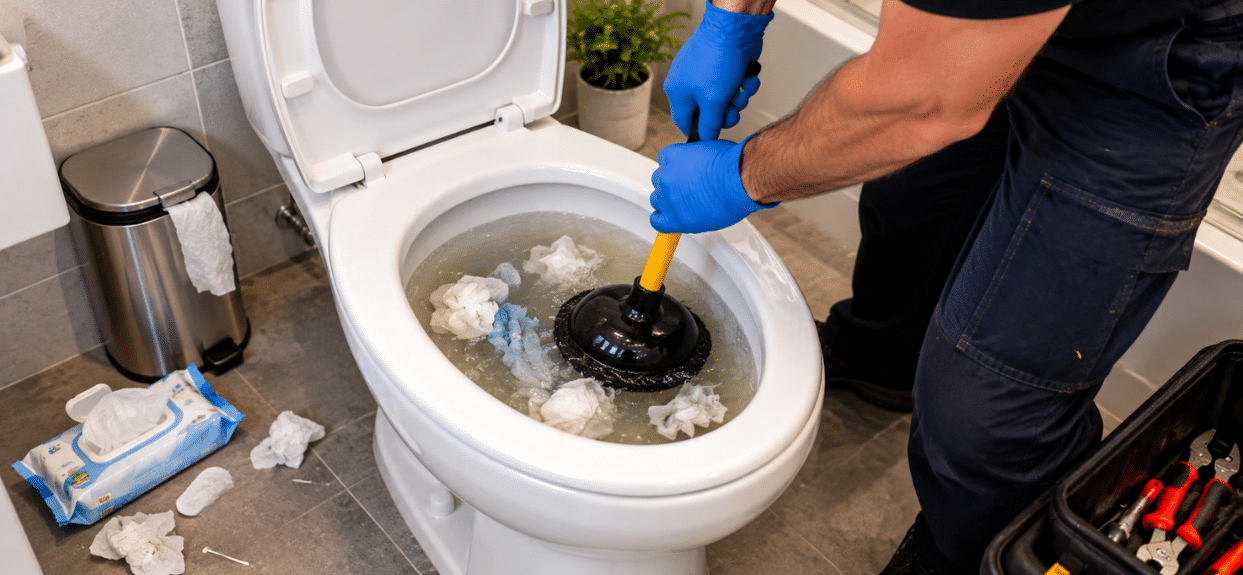
If the blockage is minor, a toilet plunger can sometimes shift it. Place the plunger firmly over the drain hole, push down slowly and pull back with force a few times. Repeat this six to eight times before trying to flush again. If nothing moves, stop – forcing more water into a blocked toilet risks an overflow.
For stubborn or deep blockages, you need a professional. DeWAR Plumbers handle blocked toilet repairs in Dublin every day and can clear blockages that a plunger cannot touch.
3. A Broken or Worn Flapper Valve
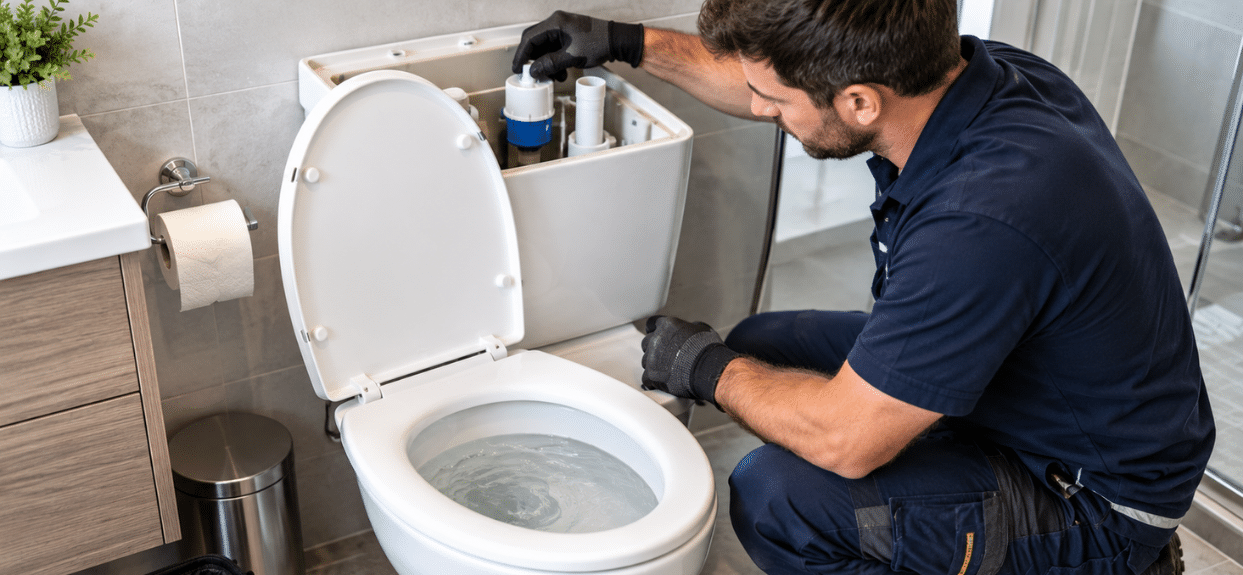
Inside the cistern, the flapper is a rubber seal that sits over the outlet hole. When you press the flush handle, the flapper lifts and water rushes into the bowl. Over time, this rubber wears out or warps and water leaks through continuously, meaning the cistern never holds enough water for a proper flush.
A running toilet – that constant trickling sound you hear even when nobody has flushed – is a classic sign of a worn flapper. Replacing a flapper is a relatively quick job, but getting the right part for your toilet model matters.
4. A Broken Flush Handle or Mechanism
Sometimes the toilet flush handle snaps or disconnects from the lift chain inside the cistern. Press the handle and feel for any resistance – if it goes down but nothing happens, the chain connecting the handle arm to the flapper has come loose or snapped.
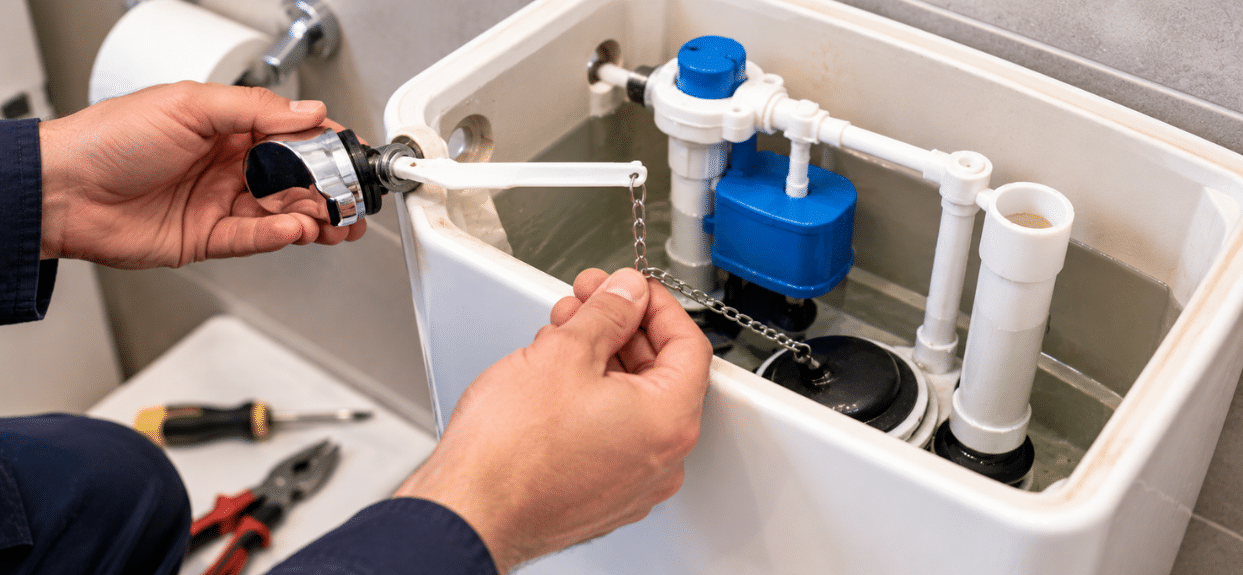
Open the cistern and check whether the chain is attached at both ends. If the chain has simply come off the hook, you can re-attach it yourself. If the arm or handle is broken, it will need replacing.
5. A Problem With the Overflow Pipe
If water is constantly running out through the overflow pipe on the outside of your house, the cistern is overfilling. This usually means the float valve is set too high or is faulty. Left alone, this wastes water and can indicate a component that is about to fail completely.
6. A Cracked or Damaged Cistern
Less common but worth mentioning – a crack in the cistern body itself will cause water to leak out and the flush to fail. If you notice damp patches on the floor around the base of the cistern or water marks running down the outside, the cistern may need replacing.
What You Should Never Flush?
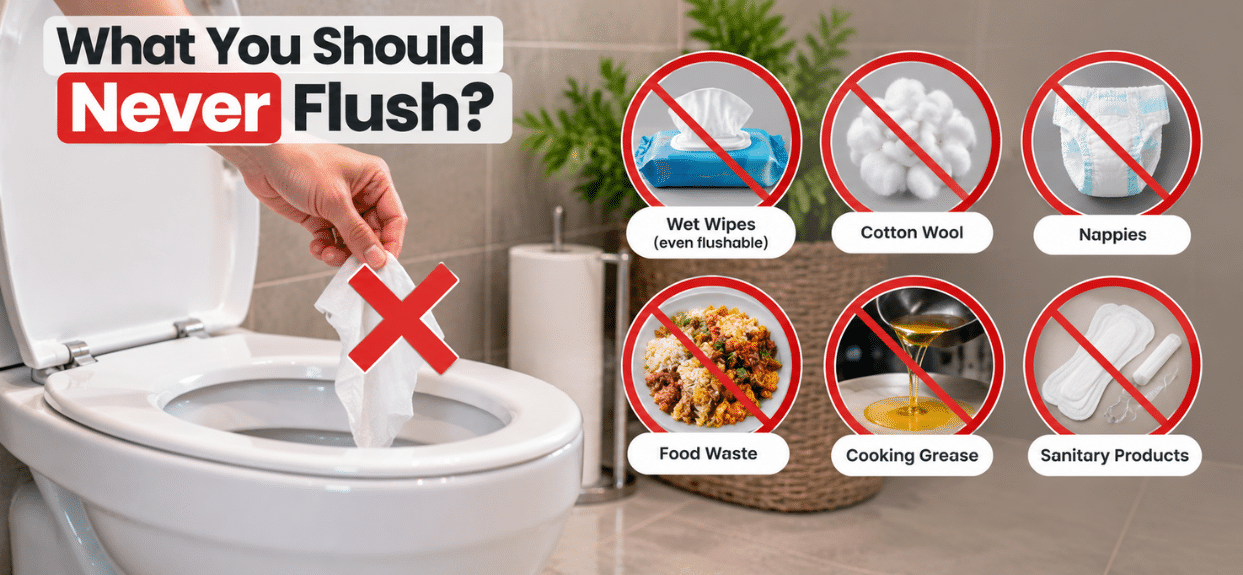
Preventing toilet blockages in the first place saves a lot of trouble. The only things that should go down a toilet are human waste and toilet paper. Everything else – wet wipes (even those labelled “flushable”), cotton wool, nappies, food waste, cooking grease, and sanitary products – will cause blockages in your pipes or the wider drainage system.
When to Stop DIY and Call a Plumber?
There is no shame in knowing when a job is beyond a quick fix. Call a professional if:
- The toilet has been blocked for more than a day and home remedies have not worked
- Water is leaking from the base of the toilet
- The flush mechanism is completely broken and you are not comfortable working inside the cistern
- You can hear gurgling from other drains when you flush – this suggests a deeper blocked drain in your plumbing system
- The toilet bowl is cracked
Attempting to force a blocked toilet or over-tighten cistern components without experience can make things worse and more expensive to fix.
Toilet Repair in Dublin – What to Expect From a Professional?
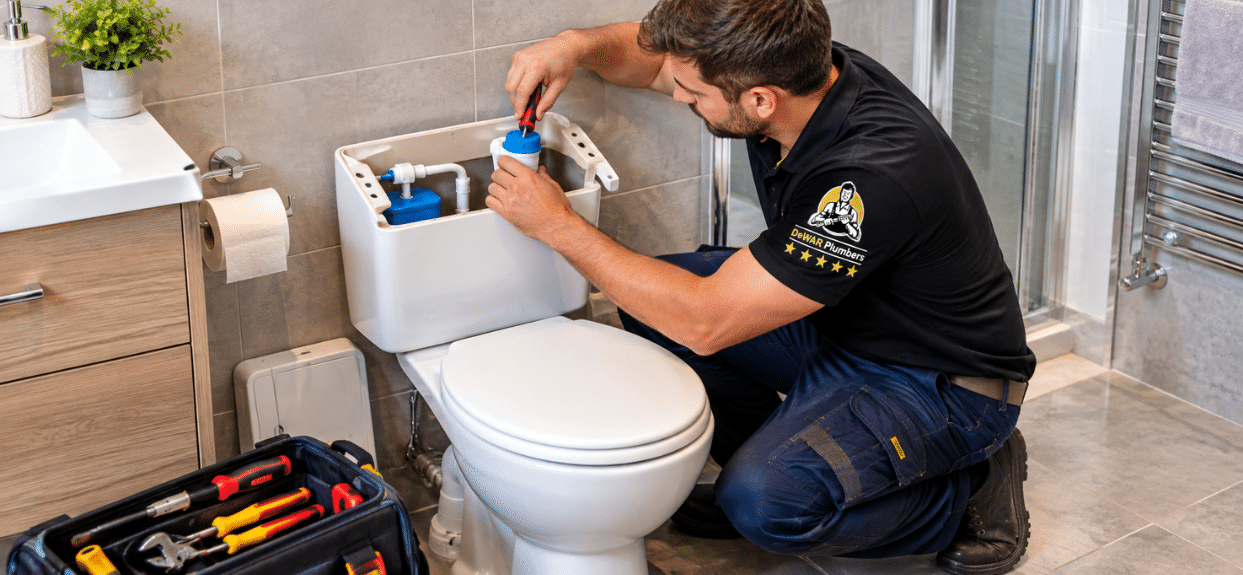
DeWAR Plumbers are a Dublin-based plumbing team with years of experience dealing with all kinds of toilet problems across Dublin. Their skilled plumbing technicians are trained to diagnose and fix toilet faults quickly and cleanly, with minimal disruption to your home or business.
Services covered include clearing blocked toilets and urinals, fixing faulty cisterns, replacing flush mechanisms, and full toilet maintenance. Most jobs are booked a day or two in advance, but same-day callouts are available for genuine emergencies.
All conventional toilet unblocking work is carried out at a fixed hourly rate. If the job turns out to be more complex, DeWAR will always walk you through the options and agree a price before any additional work begins. No surprises.
DeWAR Plumbers cover all areas across Dublin, from D1 through to D24 as well as North County Dublin and South County Dublin.
To book a toilet repair in Dublin, call 015143300 or visit dewarplumbers.ie to book online.
Conclusion
A toilet that won’t flush is almost always fixable – the key is knowing what you are dealing with. Check the cistern water level, inspect the flapper and chain, and try a plunger for a mild blockage. But if the problem keeps coming back, water is leaking, or the blockage won’t shift, it is time to bring in a qualified plumber. DeWAR Plumbers are available across Dublin for fast, professional toilet repair and blocked toilet clearing. Give them a call on 015143300 – they have been sorting out Dublin’s plumbing problems for years and will have your toilet back in working order without the fuss.
FAQs – Toilet Problems Dublin
Q1. Why won’t my toilet flush even though the cistern is full?
If the cistern is full but the flush is weak or fails, the issue is usually a worn flapper valve or a broken flush mechanism inside the cistern. The water has nowhere to go at the right force. A plumber can diagnose and fix this quickly.
Q2. How do I unblock a toilet in Dublin without a plumber?
For a minor blockage, use a toilet plunger with a firm seal over the drain hole. Push and pull repeatedly without forcing extra water. If the blockage does not clear within a few attempts, stop and call a professional plumber for blocked toilets – forcing the issue can cause an overflow.
Q3. How long does a toilet repair take in Dublin?
Most standard toilet repairs – replacing a flapper, fixing a flush handle, or clearing a blockage – take between one and two hours. More complex issues like a cracked cistern or deep drainage blockage may take longer, and a second visit may be arranged if specialist equipment is needed.
Q4. Is a broken toilet considered a plumbing emergency in Dublin?
If the toilet is the only one in your home and it is completely out of use, most Dublin plumbers will treat it as an urgent job. DeWAR Plumbers offer same-day callouts in genuine emergency situations across Dublin. Call 015143300 to check availability.
Q5. Can a leaking toilet cause water damage to my floor or bathroom?
Yes. A toilet leaking at the base – usually caused by a failed wax seal or cracked pan – can allow water to seep into the floor over time, leading to water damage, mould, and structural issues. If you notice water pooling around the base of your toilet, do not delay calling a bathroom repair specialist in Dublin.

- What to Do When Your Toilet Won’t Flush? - October 26, 2026
- Shower Repair or Replacement: How to Decide When Your Electric Shower Fails? - October 23, 2026
- How Does Power Flushing Improve Radiator Performance and Heating Efficiency? - October 15, 2026