Dublin is a city full of character, and a big part of that character lives in its older housing stock. From the red-brick terraces of Ranelagh and Rathmines to the Victorian semis of Drumcondra and Clontarf, thousands of Dublin homes were built decades – sometimes over a century – before today’s electrical standards existed. That history is worth preserving. But the wiring hidden behind those walls? That is a different story.
Electrical faults in older Dublin homes are one of the leading causes of house fires in Ireland. Most of them are completely preventable. The problem is that many homeowners either do not notice the warning signs or assume that because the lights are working, everything must be fine. That assumption has cost people dearly.
If your home was built before the 1990s and has never had a full electrical inspection, this article is for you. DeWAR Plumbers provides RECI registered electricians in Dublin who specialise in identifying and fixing exactly these kinds of problems before they become dangerous.
Why Older Dublin Homes Carry More Electrical Risk?
When homes were built in the 1950s, 60s, and 70s, the electrical demand was a fraction of what it is today. A few light fittings, a cooker, maybe a television. Modern households run dishwashers, tumble dryers, electric showers, heat pumps, multiple televisions, and dozens of always-on devices – all through wiring that was never designed to carry that load.
Beyond capacity, the materials used in older wiring degrade. Rubber-insulated cables become brittle and crack. Old fuse boards offer almost no protection against surges or short circuits. Junction boxes without proper earthing can become live. These are not theoretical risks. They are things RECI registered electricians in Dublin find regularly when they open up the walls of period homes.
Warning Signs You Should Never Ignore
1. Flickering or Dimming Lights
An occasional flicker when a large appliance kicks in might just mean a voltage fluctuation. But if your lights regularly dim or flicker for no clear reason, that points to a loose connection somewhere in the circuit. Loose connections generate heat. Heat causes fires. This is not something to put off. If you are unsure where to start, contact DeWAR Plumbers and their team will advise you on the next step.
2. Burning Smell or Scorch Marks Around Sockets
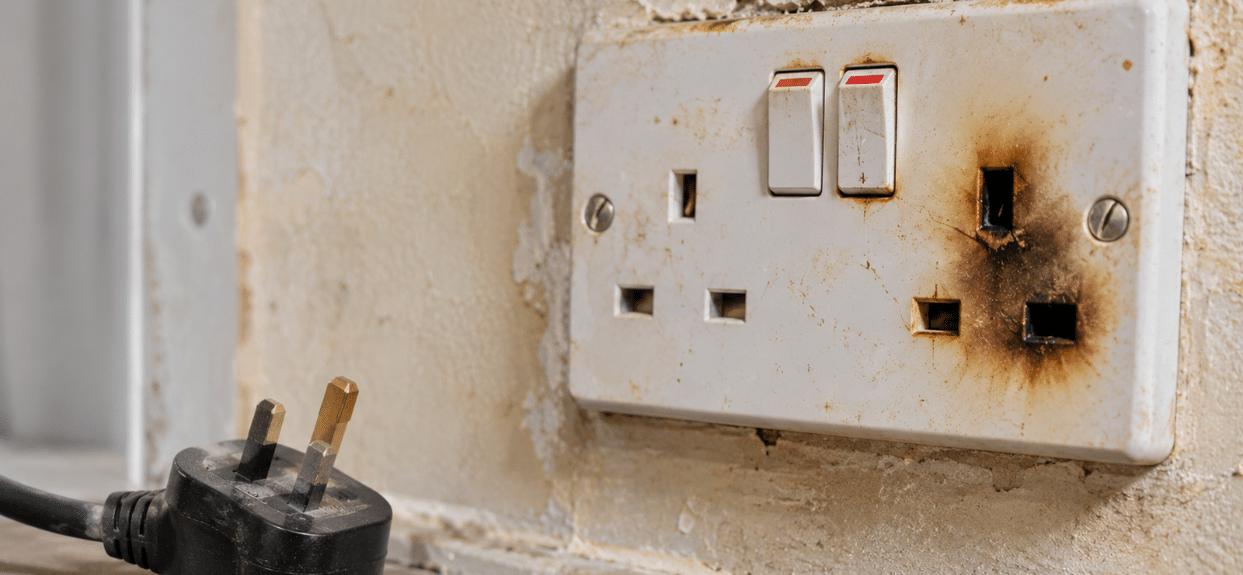
If you can smell burning near a plug socket, or if you notice any discolouration around the socket face, stop using it immediately. That scorching is evidence that the socket has already been overheating. It may be drawing more current than the wiring behind it can safely handle. Do not delay – book your electrician online and get the fault assessed before it causes serious damage.
3. Fuses That Keep Blowing or Breakers That Keep Tripping
A circuit breaker that trips once is doing its job. A breaker that trips repeatedly is telling you that something is drawing more power than that circuit is rated for. Older homes with rewirable fuse boards are particularly vulnerable here – the fuse wire can be replaced without ever identifying the underlying fault, which simply delays the problem.
If your home still has an old-style fuse board, that alone is a strong reason to call a qualified electrician in Dublin. Modern consumer units with residual current devices (RCDs) provide a level of protection that old fuse boards simply cannot match.
4. Sockets That Feel Warm to the Touch
A socket should never feel warm. If it does, the wiring behind it is under stress. This is particularly common in older homes where a single circuit feeds too many outlets – something that was acceptable in the 1960s but is completely inadequate now.
5. Two-Pin Sockets With No Earth
Some very old Dublin properties still have two-pin sockets from the era before earthing was standard practice. These provide no protection if a fault develops in an appliance. If you still have two-pin sockets anywhere in your home, your wiring needs to be looked at as a matter of urgency. If cost is a concern, DeWAR offers electrical work on finance through humm so you can get the work done safely without having to pay everything upfront.
6. Old Rubber or Fabric-Sheathed Wiring
If you have ever seen the inside of a light fitting or socket in an older home and noticed wiring covered in cloth, rubber, or lead – rather than modern white or grey plastic – the insulation on that wiring is likely degraded. Over time it becomes brittle, cracks, and exposes live conductors. This is a serious electrical hazard and requires a full assessment.
The Risk of DIY Electrical Work
It is worth saying plainly: electrical work in Irish homes must be carried out by a registered electrician. The Register of Electrical Contractors of Ireland (RECI) exists to protect homeowners. Any significant electrical work completed without proper certification can void your home insurance, create problems when you sell, and – most importantly – put your family at risk.
DeWAR Plumbers provides fully insured and RECI registered electricians across Dublin. Every engineer carries ID, arrives in uniform, and works to the highest professional standards. Whether you need a full house rewire in Dublin, a fuse board replacement, extra sockets, new lighting, or an inspection of your existing installation, the team handles it correctly and safely.
What a Domestic Electrical Inspection Covers?
A proper electrical inspection – known as a Periodic Inspection Report (PIR) – goes through your entire installation and identifies anything that falls below current standards. For an older Dublin home, this typically involves checking:
- The condition of the consumer unit or fuse board
- Earthing and bonding across the property
- The integrity of all wiring circuits
- Socket and switch condition
- RCD protection where required
- Condition of lighting circuits and fixtures
The report will highlight any defects and categorise them by urgency. Some things need immediate attention. Others can be scheduled. Either way, you leave with a clear picture of where your home stands.
Electrical Services DeWAR Provides Across Dublin
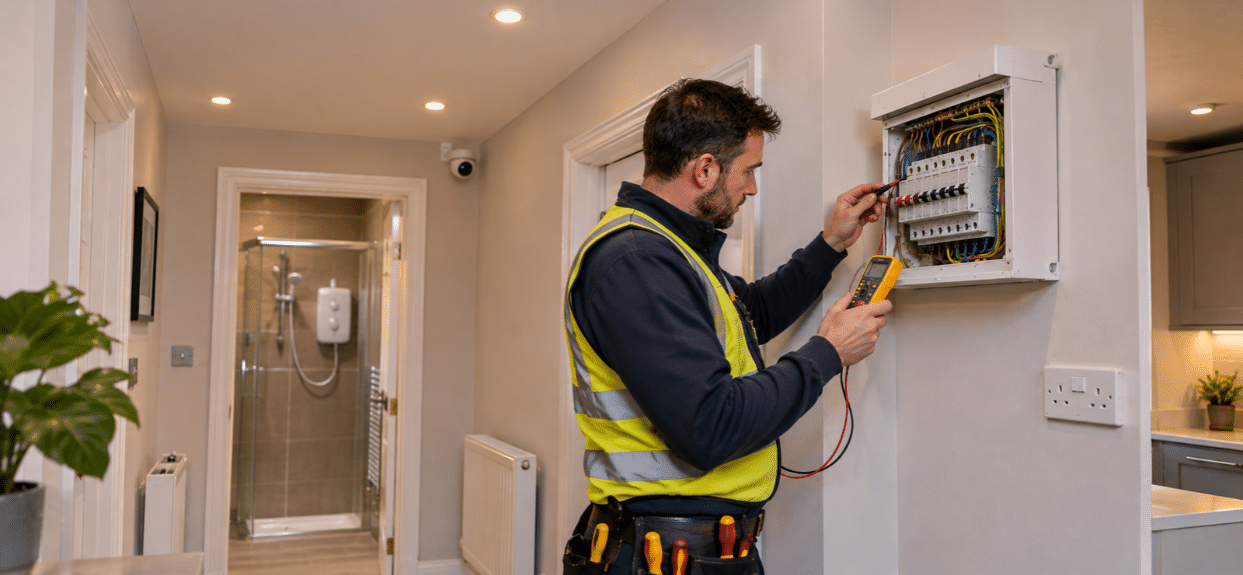
Beyond inspections, DeWAR Plumbers offers a complete range of domestic electrical services, including:
- Fuse board replacement and consumer unit upgrades
- Circuit breaker and panel work
- Electric shower installation and repair
- Lighting installation and downlight fitting
- Extra sockets and lighting circuits
- Storage heater repair and replacement
- CCTV system installation
- Immersion heater work
- Full house rewiring
- Bathroom and kitchen electrical work
The team covers the full Dublin area – from D1 right through to D24, as well as North County Dublin and South County Dublin.
Don’t Wait for Something to Go Wrong
The nature of electrical faults is that they often give warnings long before they cause serious damage. A warm socket, a flickering light, a burning smell – these are not minor inconveniences. They are the system telling you that something is wrong. The cost of getting it checked is far smaller than the cost of ignoring it.
If your Dublin home is more than 20 or 30 years old and has never had an electrical safety inspection, booking one should be near the top of your list. And if you are already seeing any of the warning signs described in this article, do not delay.
Call DeWAR Plumbers on 015143300 to book a qualified RECI registered electrician. The office is based at 68A Rathgar Avenue, Dublin 6, and the team covers all of Dublin city and county.
Conclusion
Electrical safety in older Dublin homes is not something to treat casually. The combination of ageing wiring, modern electrical loads, and the absence of modern protection devices creates a genuine and serious risk. Most of the problems are invisible until something goes wrong – which is exactly why a professional inspection matters so much.
From fuse board replacements to full rewires, DeWAR’s RECI registered electricians carry out every job to the highest standard, with transparent pricing and no surprises. If you have any doubts about your home’s electrical installation, the safest thing you can do is call a professional. Visit dewarplumbers.ie or call 015143300 today.
FAQs
Q1: How do I know if my Dublin home needs rewiring?
If your home is more than 25–30 years old and has never been rewired, it is worth getting an inspection. Clear signs include old-style fuse boards, fabric or rubber-sheathed wiring, two-pin sockets with no earth, frequently tripping breakers, and sockets or switches that feel warm. A RECI registered electrician can carry out a full Periodic Inspection Report to give you a definitive answer.
Q2: Is it dangerous to have an old fuse board in my house?
Old rewirable fuse boards do not offer the same level of protection as modern consumer units fitted with RCDs (residual current devices). They are slower to respond to faults and provide no protection against electric shock in the way that modern RCD-equipped units do. If your home still has an old-style fuse board, upgrading it is strongly recommended.
Q3: Can I do my own electrical work in Ireland?
No. In Ireland, any significant electrical work must be completed by a RECI registered electrician. This includes consumer unit replacements, adding circuits, rewiring, and installing electric showers. Unlicensed electrical work can void your home insurance and create problems when you come to sell your property.
Q4: How long does a full house rewire take in Dublin?
The time depends on the size of the property, but a typical three-bedroom Dublin house rewire takes between three and five days. The electrician will discuss the timeline with you before work begins and keep disruption to a minimum where possible.
Q5: What is a RECI registered electrician and why does it matter?
RECI stands for Register of Electrical Contractors of Ireland. It is the regulatory body that certifies electrical contractors to carry out domestic and commercial electrical work to Irish standards. Using a RECI registered electrician means the work is compliant, certifiable, and covered properly – which matters for insurance purposes and for the safety of your household.

- Electrical Safety in Older Dublin Homes: Problems You Should Never Ignore - November 4, 2026
- What to Do When Your Toilet Won’t Flush? - October 26, 2026
- Shower Repair or Replacement: How to Decide When Your Electric Shower Fails? - October 23, 2026