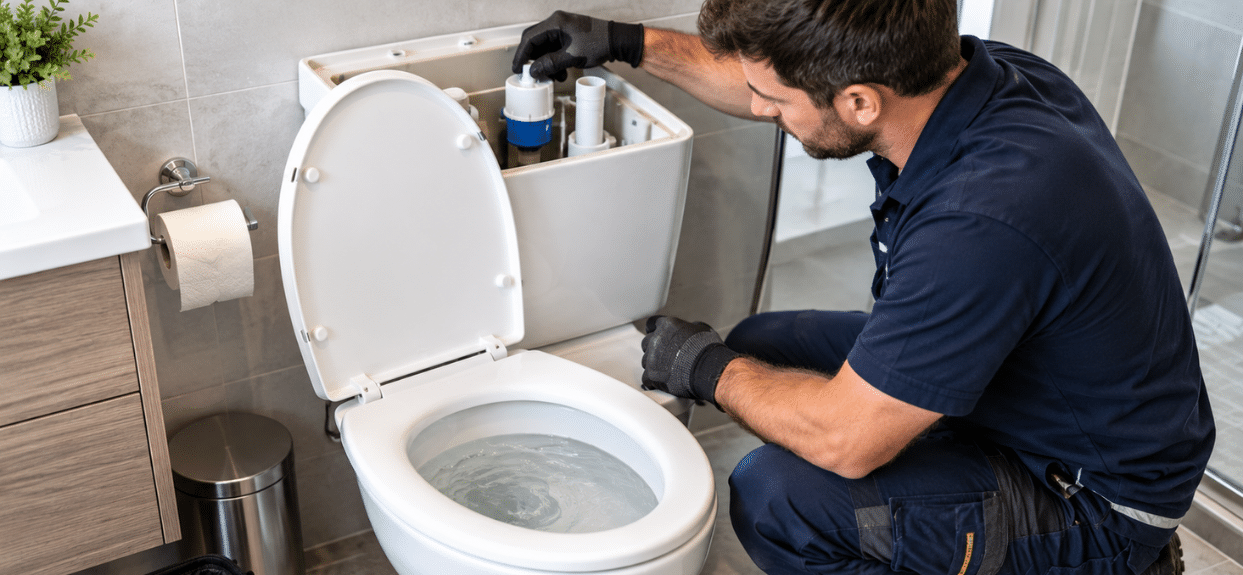
If you own a home in Swords, Malahide, Skerries, Portmarnock, Donabate, or anywhere across North County Dublin, chances are your plumbing has been quietly trying to tell you something. Most plumbing problems start small. A slow drain here, a dripping tap there, a boiler that takes a little longer to heat the water. The signs are easy to miss or ignore – until a small issue becomes an expensive repair.
This guide walks through the most common warning signs that your home needs professional plumbing services in North County Dublin, so you know exactly when to call a qualified plumber and what to expect when you do.
1. Low Water Pressure Throughout the House
If your shower barely trickles or it takes far too long to fill a kettle, low water pressure is usually the first sign of an underlying plumbing problem. It is not just inconvenient – it often points to something more serious happening behind your walls or underneath your floors.
Common causes include:
- A hidden pipe leak reducing pressure in the supply line
- Corroded or aging pipework narrowing internal flow
- A faulty pressure regulator at the mains connection
- Build-up of limescale inside older copper pipes
A drop in pressure across multiple taps and fixtures at the same time almost always means a leak somewhere in your system. Professional leak detection equipment can pinpoint the source quickly without unnecessary excavation or damage to your walls.
Do not ignore this sign. What starts as low pressure can develop into a burst pipe, water damage to floors and ceilings, or significant structural issues if left untreated.
2. Your Boiler Is Making Unusual Noises
A well-maintained boiler runs quietly. If yours has started producing banging, clanking, rumbling, whistling, or gurgling sounds, something is wrong. Each sound points to a different underlying problem.
| Sound | Likely Cause |
| Banging / Kettling | Limescale or sludge in the heat exchanger |
| Gurgling | Air or debris trapped in the pipework |
| Whistling | Restricted water flow or a failing pump |
| Clanking | Loose internal components |
Homes across North County Dublin – particularly older properties in Howth, Balbriggan, and Rush – commonly have gas or oil boilers that have not been serviced in several years. A gas boiler service or oil boiler service catches these problems early, before they result in a full breakdown or replacement.
Important: Worn or poorly maintained boilers can emit carbon monoxide – a colourless, odourless gas that is impossible to detect without a monitor. If your boiler is making unusual noises and you do not have a carbon monoxide detector fitted, this needs to be addressed immediately. DeWAR Plumbers supply and fit carbon monoxide detectors with any gas or oil service call.

3. Radiators Are Cold at the Top but Warm at the Bottom
This is one of the most frequently reported heating complaints across North County Dublin homes heading into autumn and winter. If your radiators feel warm at the bottom but cold – or even stone cold – at the top, the heating system has a circulation problem.
What it means:
Trapped air in the radiator stops hot water from reaching the top of the unit. Bleeding the radiator releases that air and usually solves an isolated case. But if the same problem keeps coming back across several radiators, the cause is almost certainly a build-up of black sludge inside the entire heating circuit.
Over time, corrosion inside radiators and pipes creates a thick, dark sediment that gradually blocks circulation. The only effective solution is a power flush – a professional process that pushes a cleaning agent through the full heating system under controlled pressure to clear the blockage.
Benefits of a power flush:
- Radiators heat evenly and reach full temperature again
- Boiler efficiency improves, reducing energy costs
- Boiler lifespan is extended
- Reduces the risk of heating system breakdown in winter
4. Damp Patches, Staining, or Mould on Internal Walls and Ceilings
If you notice a damp patch appearing on an interior wall or ceiling – especially one that has no exposure to external rain – do not assume it will dry out on its own. Internal damp is almost always caused by a leaking pipe hidden inside a wall cavity or running above a ceiling.
Signs to watch for:
- Yellow or brown staining on plaster or paint
- Peeling or bubbling wallpaper in areas not affected by outside weather
- A persistent musty smell in a specific room
- Visible mould growing on interior walls away from windows
- Soft or spongy plaster when you press on the wall
The longer water sits inside a wall or ceiling void, the more structural damage accumulates. Timber joists rot, plaster falls, and damp spreads to adjacent rooms. What could have been a quick pipe repair becomes a major renovation if left too long.

5. A Toilet That Keeps Running After Flushing
A continuously running toilet is one of those things that becomes background noise in a busy household. It seems minor – but it wastes thousands of litres of water per year and is a sign that the internal flush mechanism has partially failed.
Most common causes:
- A worn or misaligned flapper valve not sealing properly
- A faulty fill valve that keeps running to top up the cistern
- A worn cistern siphon in older toilet systems
Toilet repairs are typically quick and straightforward when handled early. If the internal components fail completely, you risk overflow and potential water damage to the floor and ceiling below.
6. Slow or Gurgling Drains
A slow-draining sink, bath, or shower is easy to dismiss as a minor inconvenience. Reaching for a chemical drain cleaner feels like a solution – but it rarely is. Chemical products treat the surface of a blockage, not the root cause, and many damage older pipework over time.
What gurgling drains really mean:
Gurgling sounds from drains are caused by air being trapped behind a partial blockage. The water cannot pass freely, so it forces air back up through the nearest opening. If multiple drains in your home are slow at the same time, the blockage is likely in the main drainage run – not just an individual pipe.
Blocked drains in Dublin are particularly common after heavy rainfall, when debris and sediment are pushed into domestic drain systems from outside. Areas like Donabate, Portrane, and Skerries – where older drainage infrastructure is more common – see this regularly.
Professional drain clearing uses jetting equipment to clear the full length of the pipe, not just the visible part near the outlet.
7. Leaking or Dripping Taps
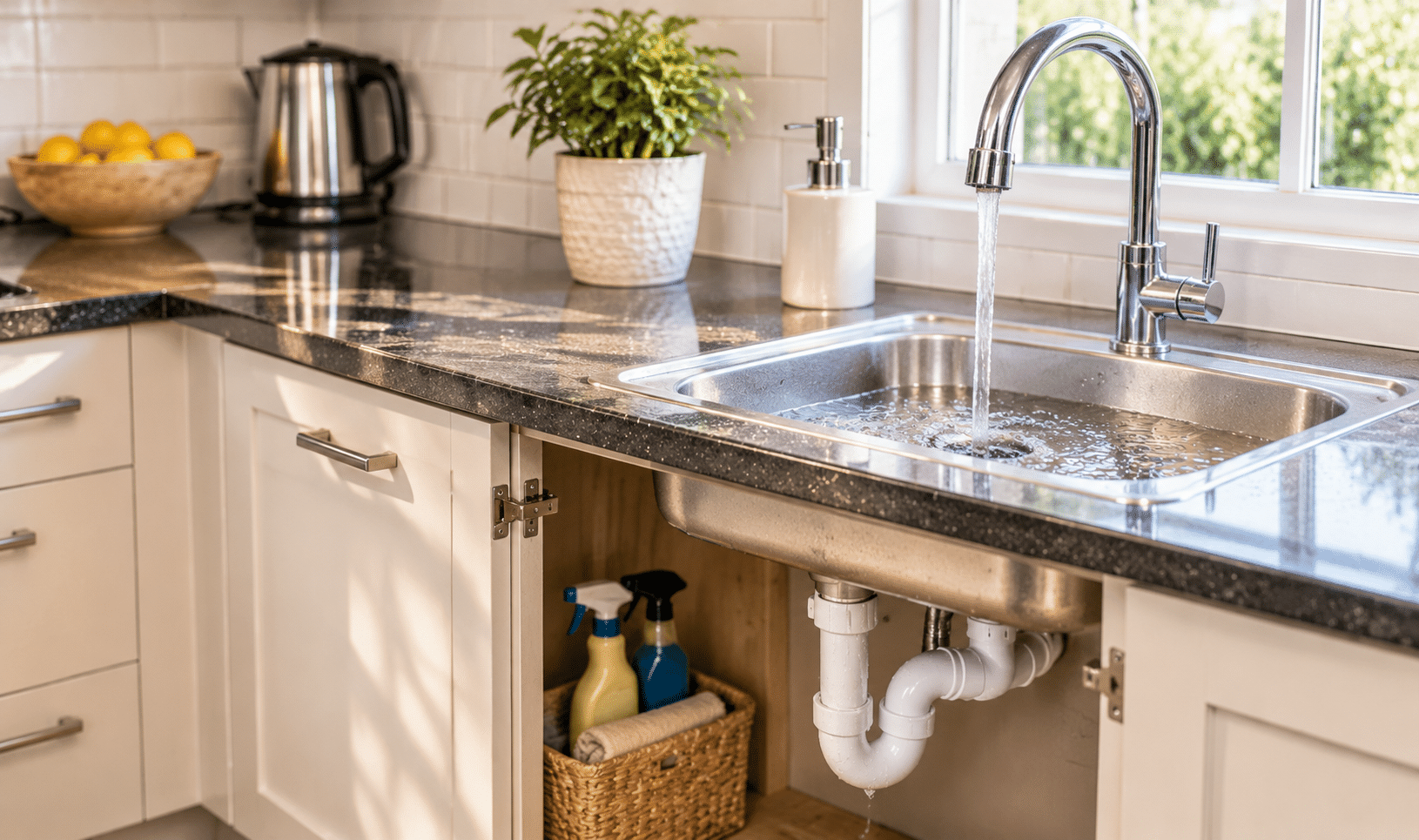
A tap that drips once per second wastes over 30 litres of water per day – more than 10,000 litres per year. Beyond the waste, a leaking tap means the internal washer, O-ring, or cartridge has worn down. If left, the valve seat underneath also wears away, turning what was a simple washer replacement into a more complex repair.
Signs your tap needs attention:
- Visible dripping even when fully closed
- Difficulty turning the tap off completely
- Water pooling around the base of the tap
- A change in the sound or feel of the tap handle
This is a quick repair for a qualified plumber and one of the simplest ways to reduce your household water bills.
8. Shower Losing Pressure or Running Cold
If your shower loses pressure mid-use, flicks unexpectedly between hot and cold, or will not reach a consistent temperature, there is a problem with either the shower unit itself or the water supply feeding it.
Possible causes:
- A failing thermostatic cartridge in a mixer shower
- A worn pump in a power shower
- An electric shower unit reaching the end of its lifespan
- Low incoming water pressure affecting supply
Shower repairs cover everything from pump replacements to full electric shower unit swaps. In most cases, a repair or replacement can be completed in a single visit.
9. Hot Water Takes Too Long to Arrive at the Tap
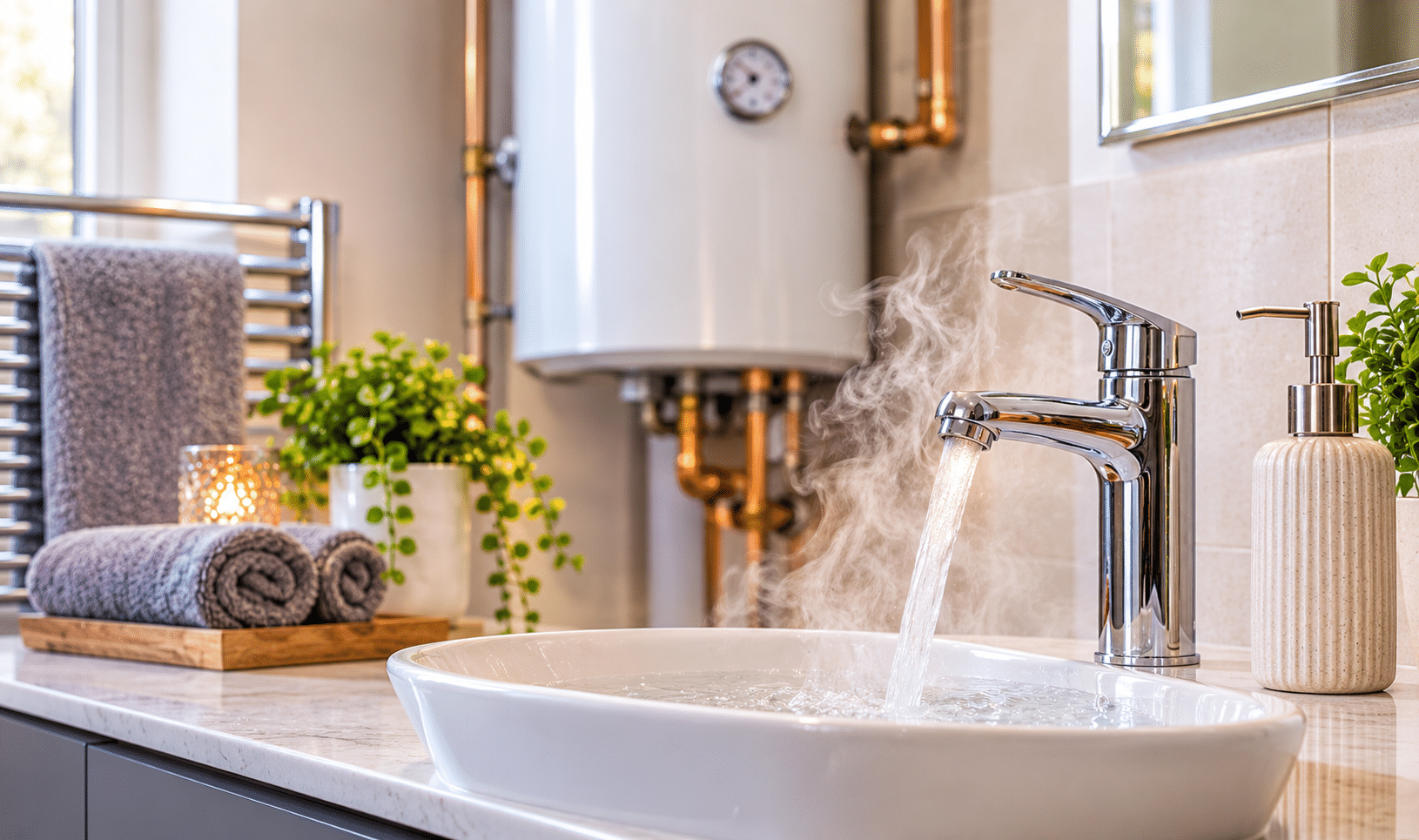
If you are running the hot tap for 30 seconds or more before warm water arrives, the system is losing heat somewhere between the cylinder and the tap. This is not just an inconvenience – it means your heating system is using more energy than it should.
Common causes:
- Poor insulation on hot water pipes
- A circulation pump that is not operating correctly
- An undersized or ageing hot water cylinder
- A problem with the immersion or heat exchanger
This is worth investigating not just for comfort but for energy efficiency. Homes in North County Dublin with older plumbing layouts often have pipe runs that were never properly insulated – a small fix that makes a noticeable difference to running costs.
10. Visible Corrosion or Discolouration on Pipes
If you can see your pipes – under the sink, in the hot press, or in the attic – take a look at their condition. Green or blue staining on copper pipes indicates corrosion at a joint or fitting. Brown or rust-coloured water from your taps suggests corrosion inside the pipe itself.
Corroded pipes are more likely to develop pinhole leaks over time, and they can affect the quality of your water supply. If you notice these signs, have a plumber inspect the pipework before a leak develops.
Areas Covered by DeWAR Plumbers Across North County Dublin
DeWAR Plumbers service all areas of North County Dublin, including:
Balbriggan · Donabate · Gormanstown · Howth · Kinsealy · Malahide · Oldtown · Portmarnock · Portrane · Rush · Skerries · St. Margarets · Swords
Their plumbers are directly employed and locally based – not subcontractors – which means faster response times and consistent quality across every job. DeWAR Plumbers are RGII registered engineers, compliant with IS 813 and IS 820, and have been serving North County Dublin homeowners for many years.
Conclusion
Your home’s plumbing rarely fails without warning. Low water pressure, cold radiators, running toilets, slow drains, boiler noises, and damp patches are all early signals – each one easier and cheaper to fix when caught early than when left to get worse.
If you have noticed any of the signs covered in this guide, the right move is to speak to a qualified plumber in North County Dublin before a minor issue becomes a major repair.
DeWAR Plumbers are a fully registered, experienced plumbing and heating company covering all of North County Dublin – from Skerries to Howth, Swords to Malahide. Their team handles everything from emergency callouts and boiler servicing to drain clearing, bathroom installations, and leak detection.
📞 Call DeWAR Plumbers today on 015143300 to book a visit or discuss any concerns about your home’s plumbing.

FAQs
Q1: How do I know if I need an emergency plumber in North County Dublin?
You need an emergency plumber if you are dealing with a burst pipe, a complete loss of water supply, an actively flooding toilet or drain, a gas boiler that has stopped working in cold weather, or any situation where water is causing visible damage inside your home right now. For urgent issues across North County Dublin, call DeWAR Plumbers on 015143300.
Q2: How often should a boiler be serviced in Dublin?
Both gas and oil boilers should be professionally serviced once a year. Annual servicing keeps the unit running at its best efficiency, reduces the risk of carbon monoxide emissions from worn components, and catches developing faults before they become breakdowns. DeWAR Plumbers carry out boiler servicing across all of North County Dublin.
Q3: What causes blocked drains in North County Dublin homes?
The most common causes are build-up of grease, food debris, and hair in domestic pipework, combined with external debris – particularly after heavy rainfall – pushing sediment into older drain systems. Homes in coastal and rural areas of North County Dublin such as Skerries, Portrane, and Rush can be more susceptible to external drain issues. Professional drain jetting clears the full length of the pipe rather than just the surface of the blockage.
Q4: What is a power flush and does my heating system need one?
A power flush is a professional process that circulates a cleaning solution through your entire heating system under controlled pressure to remove black sludge, rust, and debris that has built up over years inside radiators and pipes. If your radiators are cold at the top, slow to heat, or your boiler is working harder than usual, a power flush is likely needed. It improves efficiency, reduces energy costs, and extends the life of your boiler.
Q5: Which areas in North County Dublin do DeWAR Plumbers cover?
DeWAR Plumbers cover all of North County Dublin including Balbriggan, Howth, Donabate, Gormanstown, Kinsealy, Malahide, Oldtown, Portmarnock, Portrane, Rush, Skerries, St. Margarets, and Swords – as well as all Dublin postcodes. You can find full coverage details at dewarplumbers.ie or call the office directly on 015143300.

- Common Signs Your Home Needs Professional Plumbing Services in North County Dublin - November 11, 2026
- Electrical Safety in Older Dublin Homes: Problems You Should Never Ignore - November 4, 2026
- What to Do When Your Toilet Won’t Flush? - October 26, 2026