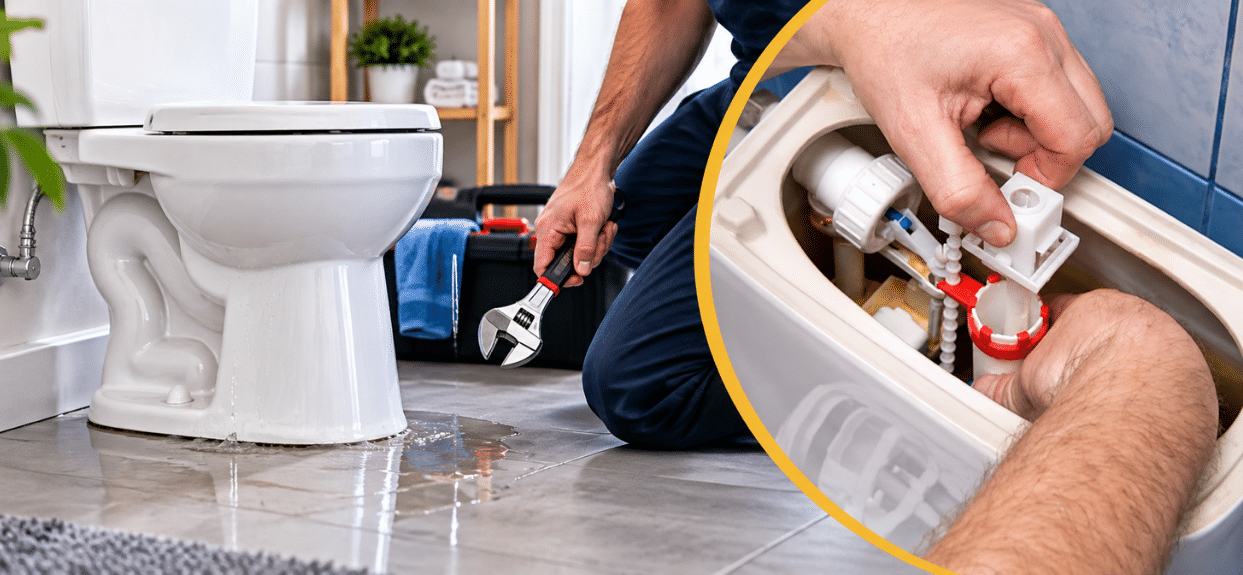
There are plumbing problems you can put off for a day or two, and then there are problems that demand your attention the moment you spot them. A toilet leaking at the base falls firmly into the second category. That small puddle sitting around the bottom of your toilet bowl is not just an annoyance – it is a sign that something has failed inside your plumbing, and ignoring it will only make matters worse.
If you are based anywhere in Dublin and have noticed water collecting around the base of your toilet, this guide will walk you through what is actually going on, why it matters, and when it is time to stop DIY attempts and call in a qualified toilet repair in Dublin specialist.
Why Is My Toilet Leaking at the Base?
Most people assume a leaking toilet is a simple drip from a loose connection. But when the water is coming from the base, the problem runs a little deeper – literally. Here are the most common reasons this happens:
1. A Worn or Failed Wax Ring Seal
The wax ring is the seal that sits between the base of your toilet and the drain pipe in your floor. Over time – especially in older Dublin homes – this wax seal dries out, cracks, or simply loses its grip. Once it goes, wastewater and fresh water begin seeping out every time you flush. You will usually notice the puddle appearing right after you use the toilet, which is the clearest sign the wax ring is the culprit.
2. Loose Toilet Bolts (Closet Bolts)
Your toilet is secured to the floor by a pair of bolts called closet bolts or johnny bolts. If these work loose – which happens gradually over years of use – the toilet rocks slightly with every flush. That rocking motion breaks the wax seal and allows water to escape. Sometimes you can feel the toilet shift slightly when you sit down, which is a warning sign worth acting on quickly.
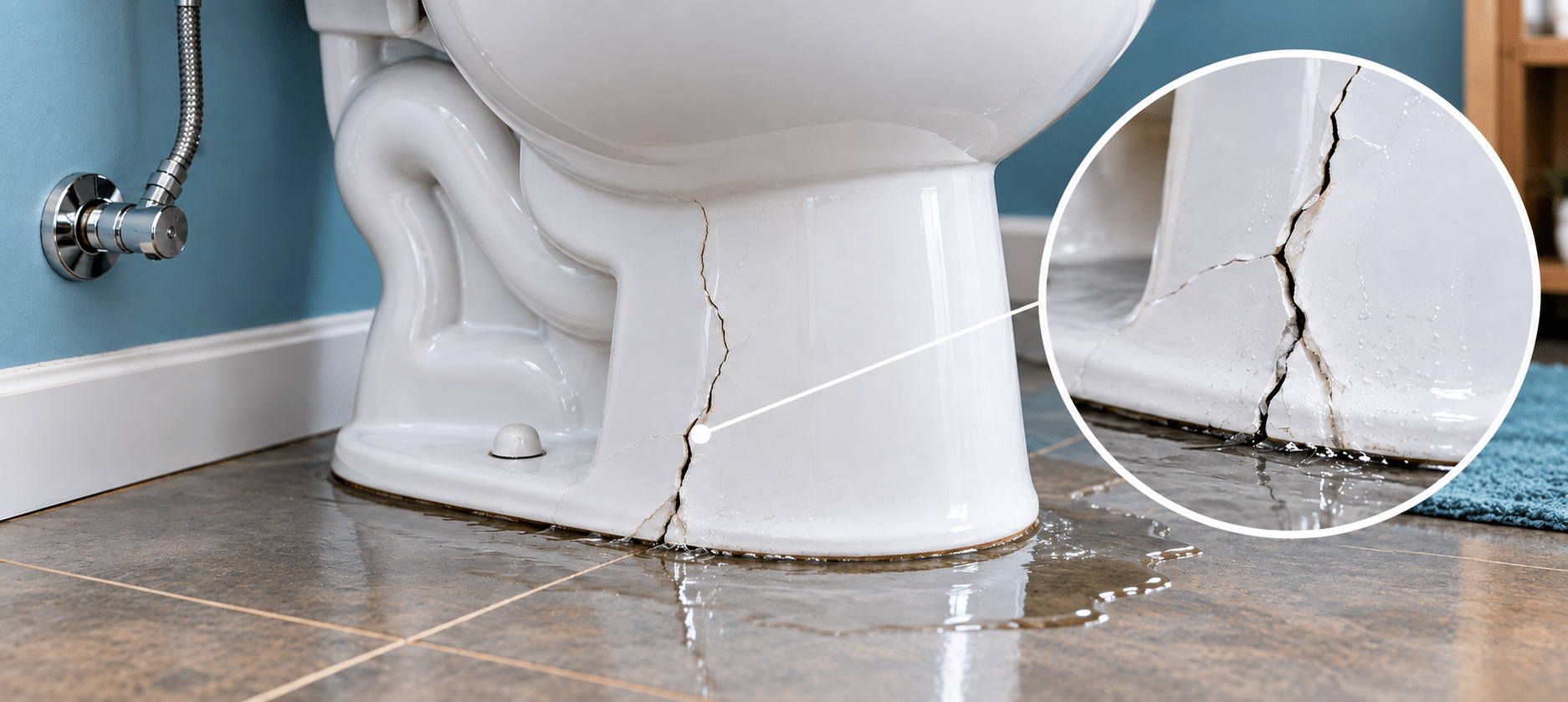
3. Cracked Toilet Base or Porcelain
A crack in the porcelain at the base of your toilet pan can be hairline-thin and almost impossible to spot with the naked eye. But even a tiny crack will let water escape. If you cannot find any other obvious cause for the leak, a cracked base may be the reason – and in most cases, this means the toilet will need to be replaced rather than repaired.
4. Condensation Dripping Down the Outside
In older bathrooms without proper ventilation – common in Dublin’s period housing stock – the toilet tank can sweat heavily. This condensation drips down the outside of the cistern and collects at the base, mimicking the look of a base leak. It is worth ruling this out before getting a new toilet repair quote in Dublin, though if you are unsure, a professional assessment saves you time and stress.
Is a Toilet Leaking at the Base Dangerous?
Yes, if left untreated, water damage to your subfloor is the biggest concern. Dublin homes, particularly in areas like Clontarf, Rathfarnham, and Glasnevin, often have older timber subfloors. Water seeping through for weeks or months can rot the timber, weaken the floor structure, and create a costly repair job that goes far beyond replacing a wax ring.
There is also a hygiene risk. Wastewater contains bacteria. If your toilet is leaking sewage water rather than clean water, you are dealing with a contamination issue that needs professional attention straight away.
Finally, the continuous water loss adds to your water bills – something no homeowner wants to deal with unnecessarily.
Can You Fix a Toilet Leaking at the Base Yourself?
If you are reasonably handy and the problem is a loose closet bolt, tightening it may stop the leak temporarily. But if the wax ring has failed, the repair involves turning off the water supply, draining the cistern and bowl, disconnecting the toilet, lifting the entire unit, replacing the wax ring, and resetting the toilet – all while ensuring the new seal is perfectly aligned with the drain flange.
Get it wrong and you are back to square one within weeks, or worse, you create a bigger leak than you started with. For most Dublin homeowners, this is a job best left to a trained plumber who has done it dozens of times and knows what to look for once the toilet is lifted – including whether the drain flange itself is damaged or corroded.
Signs You Need Professional Toilet Repair in Dublin Immediately
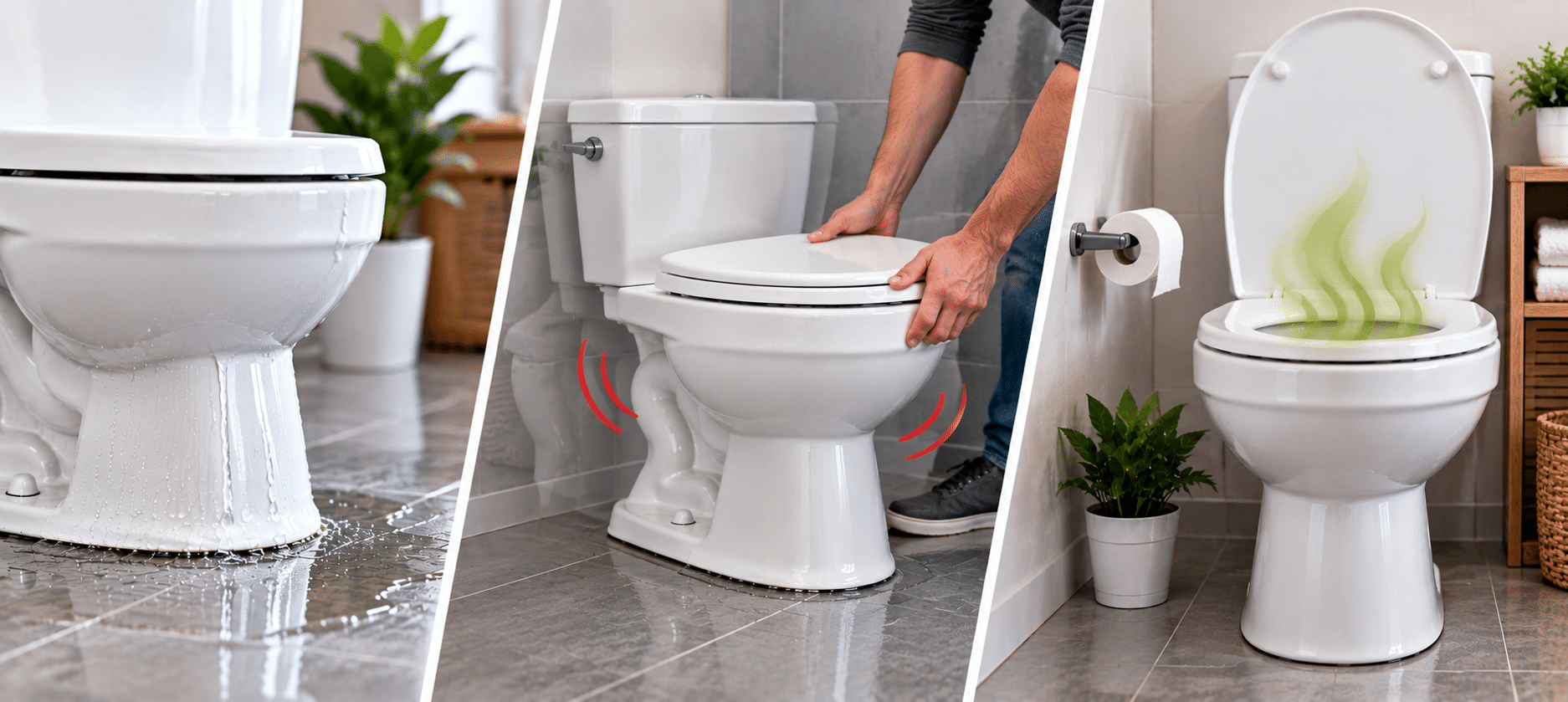
Do not wait around if you notice any of the following:
- Water pooling at the toilet base that reappears within hours of wiping it up
- A rocking or unstable toilet when you sit down
- A sewage or foul smell coming from around the toilet
- Visible cracks in the toilet pan or cistern
- Water stains or soft spots on the floor near the toilet, suggesting long-term water damage
- A constantly running toilet combined with the base leak, indicating multiple faults
These are not warning signs – they are urgent ones. A blocked toilet or a faulty seal left unaddressed can cause damage that runs into hundreds or thousands of euros in floor and structural repairs.
What Does a Toilet Repair in Dublin Actually Involve?
When you call a qualified plumber for a base leak, here is a general idea of what happens:
Step 1 – Diagnosis: The plumber will check whether the water is coming from the base seal, the supply line, condensation, or a crack. This matters because the repair approach is different in each case.
Step 2 – Water Isolation: The supply valve behind or beneath the toilet is shut off, and the cistern is flushed and sponged dry.
Step 3 – Toilet Removal: The toilet is carefully lifted off the floor. The plumber will inspect the wax ring, the drain flange condition, and the bolts at this point.
Step 4 – Repair or Replacement: A new wax ring is fitted, bolts replaced if needed, and the drain flange inspected for damage. If the toilet pan is cracked, a toilet installation Dublin will be recommended as the more cost-effective long-term fix.
Step 5 – Reset and Test: The toilet is reset, sealed, and tested through multiple flushes to confirm the leak is fully resolved before the plumber leaves.
Why Choose DeWAR Plumbers for Toilet Repair in Dublin?
Not every plumber in Dublin offers the same level of reliability. At DeWAR Plumbers, all technicians are directly employed in-house – not subcontractors pulled in from an agency. That means consistent workmanship, accountability, and engineers who know the Dublin housing stock inside out, from Georgian terraces in the Liberties to modern apartments in Sandyford.
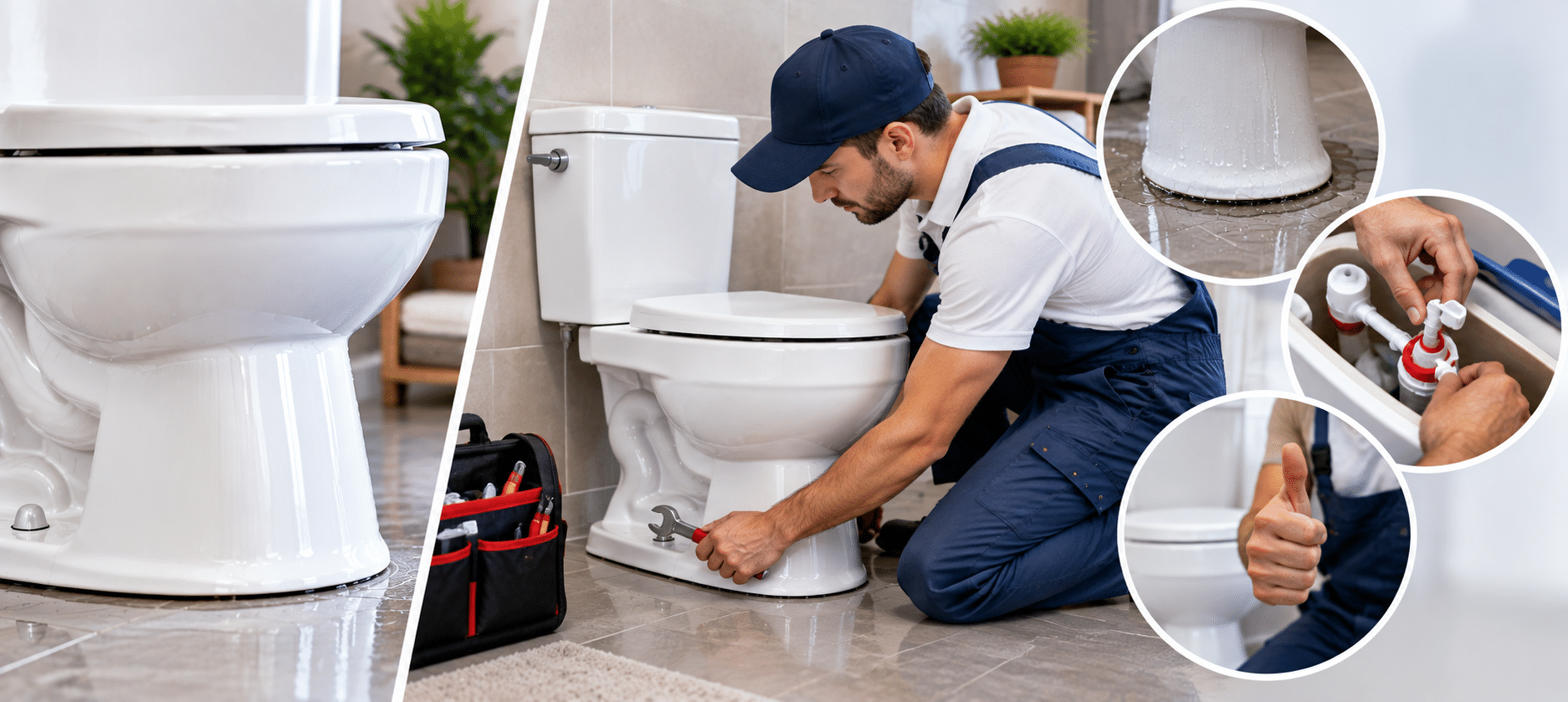
DeWAR Plumbers cover all Dublin postcodes from D1 through to D24 and offer emergency plumbing Dublin services for situations that simply cannot wait until Monday morning.
If your toilet is leaking right now, call 015143300 and speak to someone who can help today.
Conclusion
A toilet leaking at the base is one of those issues that looks minor on the surface but carries a surprisingly serious set of consequences if ignored – from subfloor damage and mould growth to hygiene risks and rising water bills. The cause is usually a failed wax ring seal, loose closet bolts, or a cracked pan, and in most Dublin homes the repair is not a straightforward weekend job.
Calling a qualified toilet repair Dublin professional at the first sign of a base leak is always the smarter and cheaper long-term decision. DeWAR Plumbers provide fast, reliable toilet repair and installation services across all Dublin areas. Call 015143300 to book your assessment today.
FAQs – Toilet Repair Dublin
Q1. How much does it cost to fix a toilet leaking at the base in Dublin?
The cost depends on the cause. Replacing a wax ring seal is typically straightforward for an experienced plumber and is one of the more affordable toilet repairs. If the toilet pan is cracked and needs full replacement, the cost will be higher but is still far less than the floor damage you risk by waiting. Contact DeWAR Plumbers on 015143300 for an honest assessment before any work begins.
Q2. Can a toilet leaking at the base fix itself?
No. A base leak will not resolve on its own. A worn wax ring seal will not reseal itself, and loose bolts will only continue to work looser with each flush. Leaving the problem untreated typically results in water damage spreading beneath the tiles and into the subfloor, increasing the overall repair cost significantly.
Q3. How long does toilet repair take in Dublin?
For a standard wax ring replacement or bolt tightening, most toilet repairs are completed within one to two hours. If the toilet needs to be replaced entirely or if there is damage to the drain flange or subfloor, the job will take longer. A qualified plumber will give you a clear timeframe once the initial inspection is complete.
Q4. Is a toilet leaking at the base a plumbing emergency in Dublin?
It depends on the severity. If water is actively flooding or you can smell sewage, treat it as an emergency and call immediately. For a slow or intermittent base leak with no foul odour, it is still urgent and should be dealt with within 24 to 48 hours to prevent floor damage. DeWAR Plumbers handle both emergency and same-day scheduled toilet repair Dublin calls.
Q5. What areas of Dublin do DeWAR Plumbers cover for toilet repair?
DeWAR Plumbers cover all Dublin postcodes from D1 to D24, including Northside areas like Clontarf, Drumcondra, and Santry, as well as Southside locations including Rathfarnham, Dundrum, and Blackrock. Call 015143300 or visit dewarplumbers.ie to check availability and book a visit.

- Sink Drain Repair in Dublin: When Is a Repair Better Than Replacement? - October 8, 2026
- Toilet Leaking at the Base: When You Need Toilet Repair in Dublin? - September 22, 2026
- Why Does Your Tap Keep Dripping After You Turn It Off? - September 16, 2026