If your home never seems to warm up properly, certain rooms are cold no matter how long the heating runs, or your boiler has started making strange noises – chances are your central heating system has a serious build-up of sludge and debris inside it. A professional power flush service in Dublin is one of the most effective ways to fix all of that – restoring your radiators to full performance and cutting your energy bills at the same time.
What Is Power Flushing?
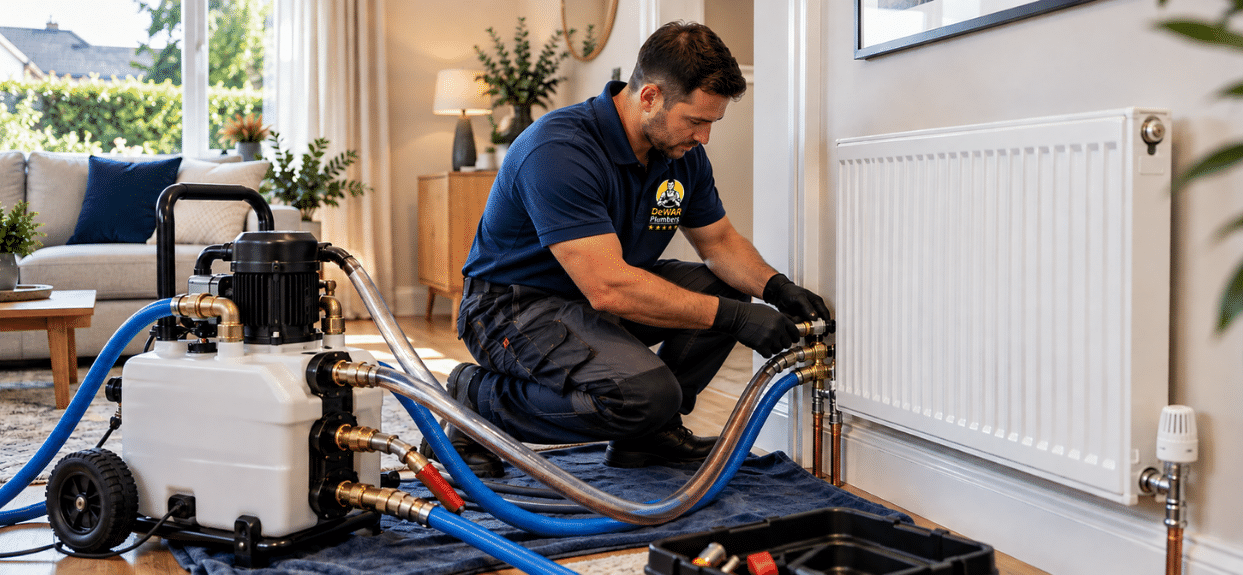
Power flushing is a deep-cleaning process for your central heating system. A qualified engineer connects a high-powered flushing machine directly to your heating circuit and forces water mixed with specialist chemical cleaners through the pipework, boiler, and every radiator at high velocity. The force loosens and flushes out the rust, sludge, limescale, and debris that has built up inside your system over the years.
It is not a quick rinse or a top-up of chemicals – it is a thorough mechanical clean of the entire circuit, including the hard-to-reach sections that never get touched during routine boiler servicing.
Why Does Sludge Build Up in Your Heating System?
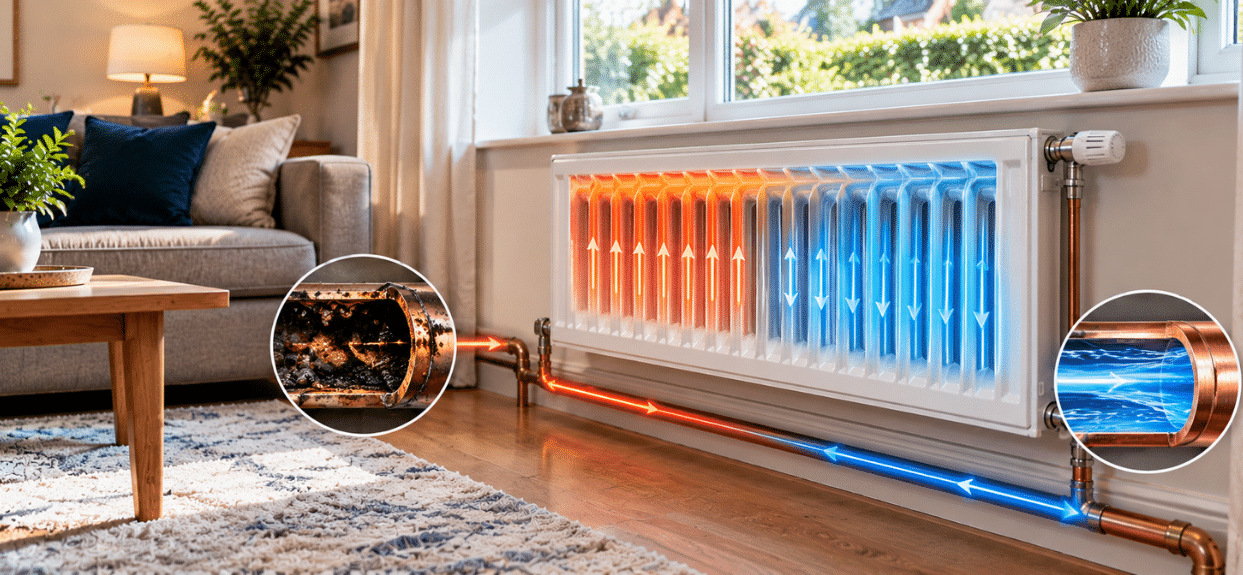
Over time, water sitting in metal pipework and radiators reacts with iron and steel. This creates a thick, dark substance called magnetite – more commonly known as heating system sludge. It circulates through the system and gradually settles, especially in the lower sections of radiators and at bends in older pipework.
On top of that, Dublin’s water supply is notoriously hard, which means limescale deposits build up inside the boiler heat exchanger and pipework. The combined effect of sludge and limescale is a system that is working against itself – water cannot circulate freely, the boiler strains to maintain temperature, and rooms stay cold even when the heating is on full. If you are unsure whether sludge is affecting your system, contact DeWAR Plumbers and their team will help you identify the problem quickly.
Signs Your Heating System Needs a Power Flush:
- Cold spots at the bottom of radiators while the top is warm
- Radiators taking a very long time to heat up fully
- Noisy boiler – banging, kettling, or gurgling sounds
- Some rooms consistently colder than others with no obvious cause
- Boiler cutting out more often than usual
- Higher gas or oil bills without any change in usage habits
- Discoloured or dirty water when a radiator is bled
How Power Flushing Directly Improves Radiator Performance?
The direct answer is straightforward. When sludge and limescale are cleared out, hot water can flow freely through every section of the radiator – from the top down to the bottom. Heat distributes evenly across the full panel surface instead of being blocked in patches.
A radiator choked with sludge might be working at as little as 40–50% of its actual output. The bottom half stays cold because settled sludge has physically blocked the flow through the lower chambers. After a proper power flush, that same radiator heats up fully and evenly – without replacing any parts.
For older Dublin homes where the heating system has not been maintained in years, the improvement can be dramatic. Rooms that never felt warm enough finally reach a comfortable temperature, and the boiler no longer has to fight through a clogged circuit just to do its job.
How Power Flushing Improves Overall Heating Efficiency?
A cleaner system is a more efficient system. Here is what changes when sludge is removed from your central heating:
Your Boiler Works Less Hard
When pipes and radiators are blocked, the boiler has to push water harder to maintain circulation. That puts extra strain on the pump and heat exchanger. After a power flush, water flows freely and the boiler returns to operating at its rated output – using less fuel to achieve the same result.
Rooms Heat Up Faster
With full circulation restored, your home reaches a comfortable temperature far more quickly. You are not running the central heating system for an extra hour every morning just to take the chill off the house.

Your Boiler Lasts Longer
Repeatedly forcing a boiler to run under strain accelerates wear on internal components. A power flush reduces that strain considerably. Whether your home has a gas boiler or an oil boiler, removing sludge can add meaningful years to the life of the unit and reduce the frequency of breakdowns.
Energy Bills Go Down
A heating system circulating clean water uses noticeably less energy than one clogged with debris. Over a full Dublin winter, the saving on your gas or oil bill can be significant – often making the cost of a power flush worthwhile within the first heating season.
Power Flushing vs. Chemical Flush – What Is the Difference?
A chemical flush is a lighter treatment where a cleaning agent is added to the existing system water and left to circulate before being drained. It works reasonably well on systems that are in fairly good condition and have been maintained regularly.
A power flush uses mechanical force combined with specialist chemicals to physically break up and remove sludge, limescale, and rust from every part of the circuit. It is far more effective for systems that are heavily contaminated or have not been cleaned in years.
If your radiators have cold spots, your boiler is making noise, or your home simply never heats up properly, a chemical flush alone will not solve the problem. The mechanical force of a proper power flush is the only reliable fix – and for systems with additional issues, professional pump repair and heating system work may be needed alongside it.
Do You Need a Power Flush Before Installing a New Boiler?
In most cases, yes. Fitting a brand-new boiler onto a system full of sludge means that sludge circulates through the new unit from day one. Most boiler manufacturers include clean system requirements in their warranty terms. Ignoring this and skipping a power flush can lead to early heat exchanger damage and a voided warranty.
A power flush before boiler replacement is a smart investment that protects the new unit and ensures it performs at peak efficiency from the very first day it runs.
What Happens During a Power Flush in Dublin?
When the team at DeWAR Plumbers carries out a power flushing service, here is how the process works step by step:
- The power flushing machine is connected to the central heating circuit – typically via the pump head or a radiator valve.
- Chemical descaler and sludge remover is added to the flushing water to break down deposits throughout the system.
- Water is pumped through the circuit at high velocity, loosening and suspending the sludge and scale inside the pipework.
- Each radiator is isolated and flushed individually to make sure nothing is left behind in any part of the system.
- Contaminated water is expelled from the system and the process is repeated until the water runs completely clear.
- A corrosion inhibitor is added to the freshly cleaned system to slow down future sludge formation and protect the pipework.
The whole process typically takes a full working day, depending on the size of the property and the condition of the system. DeWAR Plumbers cover all Dublin postcodes – from the city centre out to North County Dublin and South County Dublin.
How Often Should You Get a Power Flush?
Most heating engineers recommend a power flush every 5 to 8 years, depending on the age of your system and whether a corrosion inhibitor is already in place. If your heating system is more than 10 years old and has never been flushed, it is almost certainly overdue.
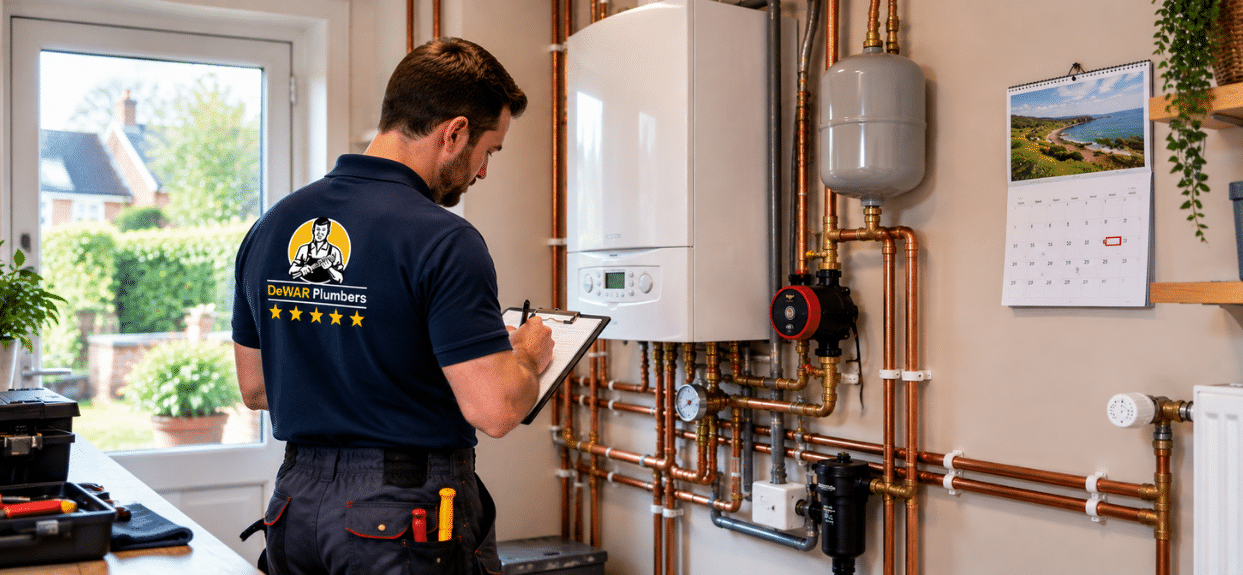
Pairing a power flush with your annual gas boiler service Dublin is a practical way to keep your entire heating setup running at its best year after year.
Conclusion
Cold radiators, a noisy boiler, and rising energy bills are not just minor irritations – they are warning signs that your central heating system needs attention. A power flush removes the sludge and limescale that silently reduces your radiator output, forces your boiler to overwork, and drives up your fuel costs season after season.
For Dublin homeowners, the improvement after a professional power flush is often immediate and noticeable – rooms heat up faster, the boiler runs quieter, and heating bills drop. It is one of the most worthwhile investments you can make for your home’s heating system, whether you are preparing for a new boiler installation or simply trying to get more out of the one you already have.
To book a power flush or ask any questions, visit dewarplumbers.ie or call the team directly on 015143300.
FAQs
Q1. How do I know if my radiators need a power flush in Dublin?
The most obvious signs are cold spots at the bottom of radiators while the top feels warm. You might also notice your boiler making banging or gurgling sounds, certain rooms failing to reach temperature, or your heating bills going up without any change in how you use it. Discoloured water when you bleed a radiator is another clear indicator. These are all classic symptoms of sludge build-up inside the heating circuit, and a professional power flush is usually the right solution.
Q2. How long does a power flush take for a typical Dublin home?
For most Dublin homes, a full power flush takes a complete working day. A 1 or 2-bedroom property will typically be done within 4 to 6 hours. Larger 3 or 4-bedroom houses can take closer to 6 to 8 hours, depending on the number of radiators and the condition of the system. The engineer will advise on the expected duration when they assess your setup.
Q3. Will power flushing damage the pipework in an older Dublin home?
This is a common concern, and it is understandable. In systems that are already in very poor condition, a power flush can occasionally reveal pre-existing weaknesses in pipework – but it does not create them. A qualified engineer will assess the system before starting and advise if there are any areas of concern. In the vast majority of cases, power flushing is safe and highly beneficial, even for older Dublin properties with original pipework.
Q4. Is a power flush necessary before installing a new boiler in Dublin?
In most cases, yes. Fitting a new gas boiler or oil boiler onto a dirty system means sludge gets circulated through the new unit from day one. Many boiler manufacturers require evidence of a clean system to honour their warranty. A power flush before a new boiler installation protects your investment, ensures the boiler performs as rated, and significantly reduces the risk of early heat exchanger damage.
Q5. Does power flushing actually reduce heating bills in Dublin homes?
Yes, it does – and often noticeably. A central heating system clogged with sludge and limescale forces the boiler to burn more fuel to achieve the same level of warmth. Once the system is cleaned and water circulates freely, the boiler operates at its rated efficiency again. Dublin homeowners typically see a reduction in gas or oil consumption over the following heating season, with rooms heating up faster and the boiler running fewer long cycles to maintain temperature.

- How Does Power Flushing Improve Radiator Performance and Heating Efficiency? - October 15, 2026
- Sink Drain Repair in Dublin: When Is a Repair Better Than Replacement? - October 8, 2026
- Toilet Leaking at the Base: When You Need Toilet Repair in Dublin? - September 22, 2026