
Your oil boiler works hard every single day, especially through the long Dublin winters. Like any appliance that runs constantly, it will eventually show signs of wear. The problem is, most homeowners don’t know what those signs look like – until the boiler stops working entirely, usually on the coldest morning of the year.
Catching problems early saves money, protects your home, and keeps your family safe. Below are 10 warning signs that your oil boiler needs attention right now – and what you should do about each one.
1. Your Boiler Keeps Cutting Out
If your boiler fires up and then shuts itself off before the house reaches temperature, something is wrong. This is called “short cycling,” and it’s often caused by a faulty thermostat, a blocked nozzle, or a problem with the burner. Don’t keep resetting the boiler and hoping it fixes itself. Short cycling puts extra strain on components and almost always gets worse over time.
2. You’re Using More Oil Than Usual
Have you noticed your oil tank emptying faster than it did last year, even though you’re heating the same rooms? A drop in oil boiler efficiency is one of the clearest signs something is wrong. A dirty burner, a worn nozzle, or a build-up of soot on the heat exchanger forces the boiler to burn more fuel to produce the same amount of heat. An oil boiler service in Dublin will clean all of these components and bring efficiency back to where it should be.
3. Strange Noises Coming from the Boiler
Oil boilers are not silent, but they should run at a consistent, relatively quiet hum. If yours is banging, rattling, rumbling, or making a loud roar when it fires, that’s not normal. Banging noises can point to a delayed ignition – meaning oil is pooling before it lights. This is a safety concern, not just an inconvenience. Get it looked at promptly.
4. Yellow or Orange Flame Instead of Blue
A healthy oil burner flame burns steadily and is typically a bright, clean colour. If the flame looks yellow, orange, or flickering inconsistently, incomplete combustion is occurring. This can result in carbon monoxide being produced inside your home. Carbon monoxide is odourless and invisible, which is exactly why it’s so dangerous. DeWAR Plumbers supply and fit carbon monoxide detectors with any boiler service – a small cost for critical protection.
5. A Smell of Oil or Fuel Around the Boiler
A faint smell of oil when the boiler first fires up can be normal. A persistent smell of fuel in your utility room, kitchen, or wherever your boiler is located is not. It usually means there’s a leak somewhere in the fuel line, or that the nozzle is dripping oil after the burner shuts off. Left unchecked, this becomes a fire risk. If you notice a strong oil smell from your boiler, call 01 514 3300 straight away.
6. Black Smoke or Soot Stains Around the Flue
Check the flue pipe and the area around your boiler exhaust. If you see soot, black streaks, or smoke residue, combustion gases are not leaving properly. This is a serious indication that your boiler needs attention immediately. Soot build up inside the boiler also insulates the heat exchanger wasting fuel and causing accelerated wear on internal parts.
7. Radiators Taking Much Longer to Heat Up
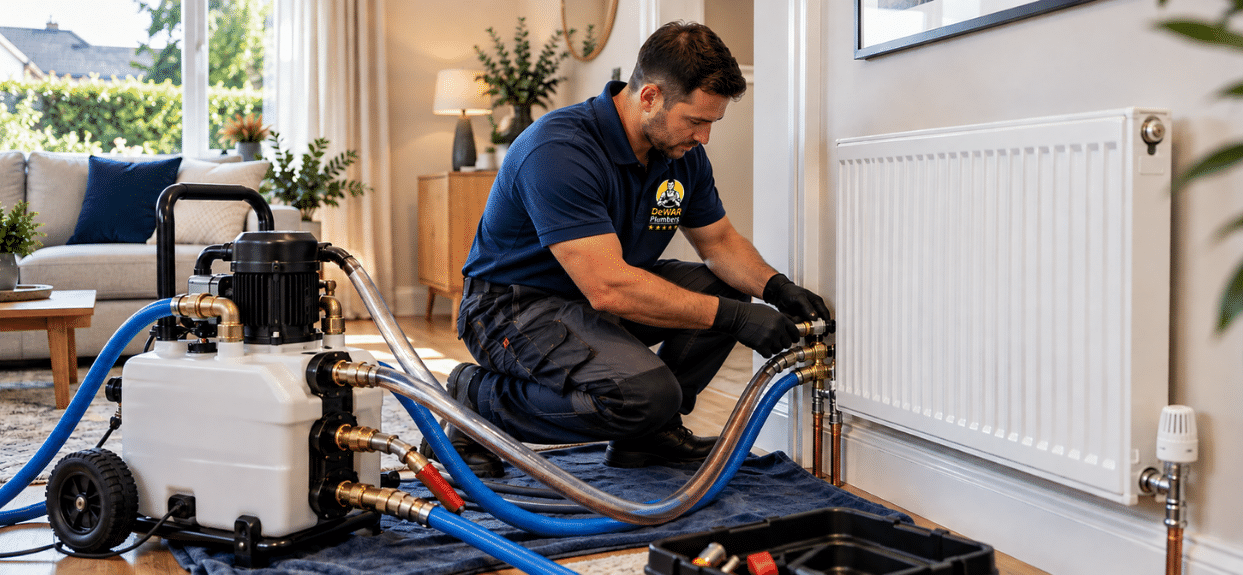
If you’re waiting an unusually long time for radiators to reach temperature – or some rooms are warm while others stay cold – the problem may not be the radiators themselves. A boiler that’s struggling to produce consistent heat output can cause uneven heating throughout the house. Before you assume it’s a bleeding or balancing issue, have the boiler itself checked. A power flush may also be worth considering if sludge has built up in your system.
8. The Boiler Keeps Locking Out and Needs Resetting
A lockout is the boiler’s way of telling you something is wrong. One reset every few weeks might not be alarming. But if you’re resetting your boiler every couple of days – or multiple times a week – there’s an underlying fault that isn’t going away on its own. Typical problems are a bad photo cell, a worn out ignition electrode or an oil supply problem. A qualified oil boiler repair technician will be able to quickly identify the cause.
9. Water Leaking from the Boiler
If water is pooling at the bottom of your boiler, seals, valves or internal fittings have failed. A slow drip can also cause long-term damage and corrosion. If your oil boiler has moisture, damp or rust stains around it, book a repair visit before it becomes a more expensive problem. We cover all Dublin postcodes from D1 to D24 so help is never far away.

10. Your Boiler Is Over 15 Years Old and Never Been Serviced
Age alone isn’t a reason to replace a boiler immediately, but an ageing boiler that has never been professionally serviced is running on borrowed time. Components degrade, seals harden and crack, and burners lose their calibration over the years. If your boiler is past its mid-life point and showing any of the signs above, it needs a thorough inspection. In some cases, a replacement oil condensing boiler will cost less in the long run than repeated repairs on an old unit. Check current oil boiler prices in Dublin to make an informed comparison.
Conclusion
Your oil boiler doesn’t usually fail without warning. The signs are almost always there in the weeks or months before a full breakdown – you just need to know what to look for. Whether it’s strange noises, excessive fuel use, a locking-out boiler, or visible soot around the flue, acting early will always cost less than waiting until the worst happens.
DeWAR Plumbers are directly employed, fully trained oil technicians serving Dublin D1 to D24. Every repair visit is fully transparent – you’ll always be told the cost before any parts are ordered, with no surprise charges. To book an oil boiler repair or get advice on what’s wrong, call 01 514 3300 or visit our contact page.
FAQs
Q1: How much does an oil boiler repair cost in Dublin?
The cost of an oil boiler repair in Dublin depends on the nature of the fault and whether replacement parts are needed. DeWAR Plumbers operate on a transparent call-out basis – you’ll always be given a clear cost breakdown and quoted for any parts before work begins, so there are no surprises.
Q2: How do I know if my oil boiler is dangerous?
The most serious warning signs include a yellow or orange flame, a persistent smell of fuel, black soot around the flue, or your carbon monoxide detector sounding. If any of these occur, switch off the boiler and call a qualified technician immediately. Do not attempt to reset or repair it yourself.
Q3: How often should an oil boiler be serviced in Dublin?
An annual oil boiler service is strongly recommended for every Dublin home running on oil heating. Regular servicing keeps the boiler running efficiently, reduces fuel costs, and catches small faults before they become expensive repairs.
Q4: Can a noisy oil boiler be repaired, or does it need to be replaced?
In most cases, a noisy oil boiler can be repaired. Banging, rattling, or roaring sounds are typically caused by issues like a faulty burner, a dirty nozzle, or a delayed ignition – all of which are fixable. A technician will assess whether repair or replacement is the more cost-effective option for your situation.
Q5: Who do I call for emergency oil boiler repair in Dublin?
Call DeWAR Plumbers on 015143300. They cover all Dublin postcodes from D1 to D24 with directly employed oil boiler technicians – not subcontractors – available for both scheduled repairs and urgent call-outs.

- How Does Power Flushing Improve Radiator Performance and Heating Efficiency? - October 15, 2026
- Sink Drain Repair in Dublin: When Is a Repair Better Than Replacement? - October 8, 2026
- Toilet Leaking at the Base: When You Need Toilet Repair in Dublin? - September 22, 2026