Underfloor heating has become one of the most popular choices for home heating across Dublin over the last decade. Whether you have electric underfloor heating or a water-based wet system, the comfort it delivers is hard to beat. But there is one problem that strikes genuine fear into homeowners – a leak hidden beneath the floor. The thought of tiles being lifted, timber being pulled up, and your home turned into a building site is enough to keep anyone up at night.
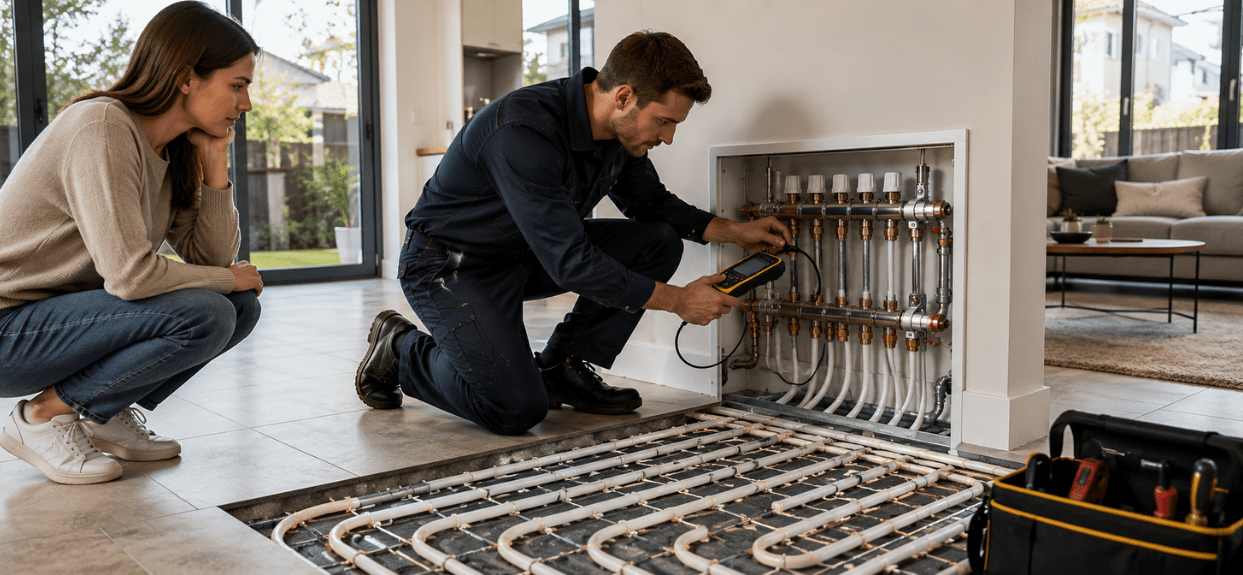
The good news is that modern underfloor heating leak detection rarely requires any of that. Today’s trained plumbers use specialist equipment and proven methods to find leaks with the minimum disruption to your home or daily routine.
Why Underfloor Heating Leaks Are Hard to Spot?
Unlike a leaking pipe under a sink or behind a radiator, underfloor heating pipes are embedded in screed or beneath floor coverings. By the time you notice something is wrong – a cold patch on the floor, rising damp, a drop in pressure on the system, or an unexplained increase in your energy bills – the leak may have already been running for some time.
Common signs that something is wrong with your underfloor heating system in Dublin include:
- Warm or wet patches on the floor surface that don’t correspond to the pipe layout
- A consistent drop in system pressure despite topping it up regularly
- Damp or discolouration appearing on walls near skirting boards
- The boiler firing more frequently than normal to maintain temperature
- Certain zones of the floor simply not heating as they should
If you’re noticing any of these, the first step is not to panic and start pulling up flooring – it’s to contact a leak detection Dublin specialist who can investigate properly.
How Plumbers Locate Leaks Without Damaging Your Floor?
The whole point of specialist leak detection equipment is to find the source of the problem without unnecessary disruption.
Here’s how a professional approaches it:
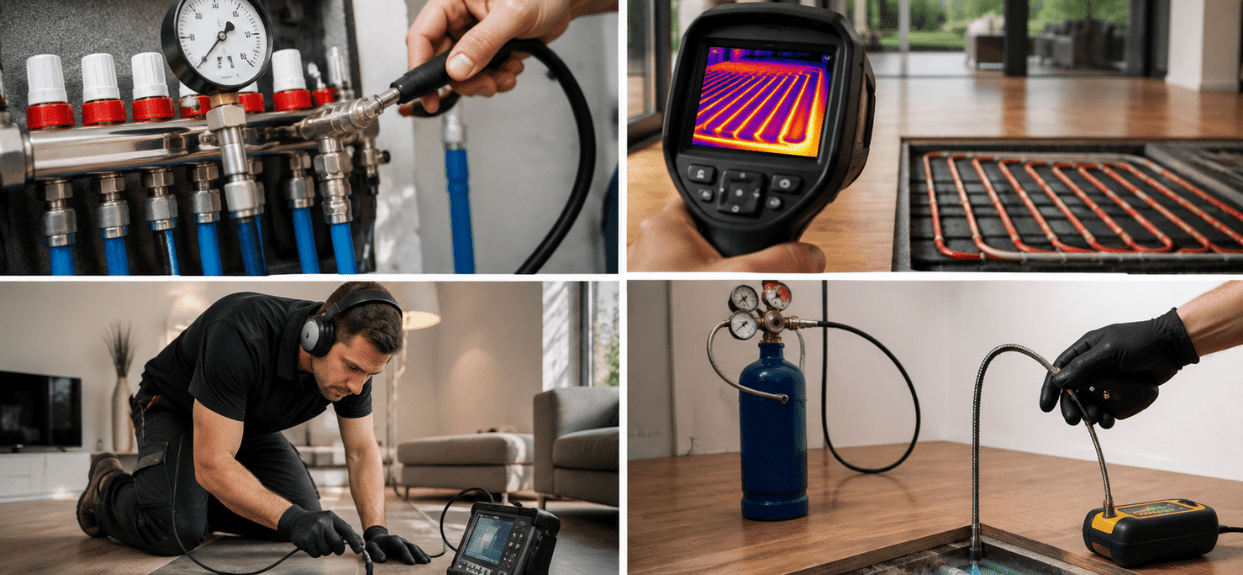
1. Pressure Testing the System
Before any physical inspection is carried out, a plumber will perform a pressure test on your underfloor heating circuit. This requires isolating each zone and applying measured pressure to determine where loss is occurring. If a pressure drop is consistent in one zone, that circuit is likely the problem. This by itself narrows the search field very much.
2. Thermal Imaging Cameras
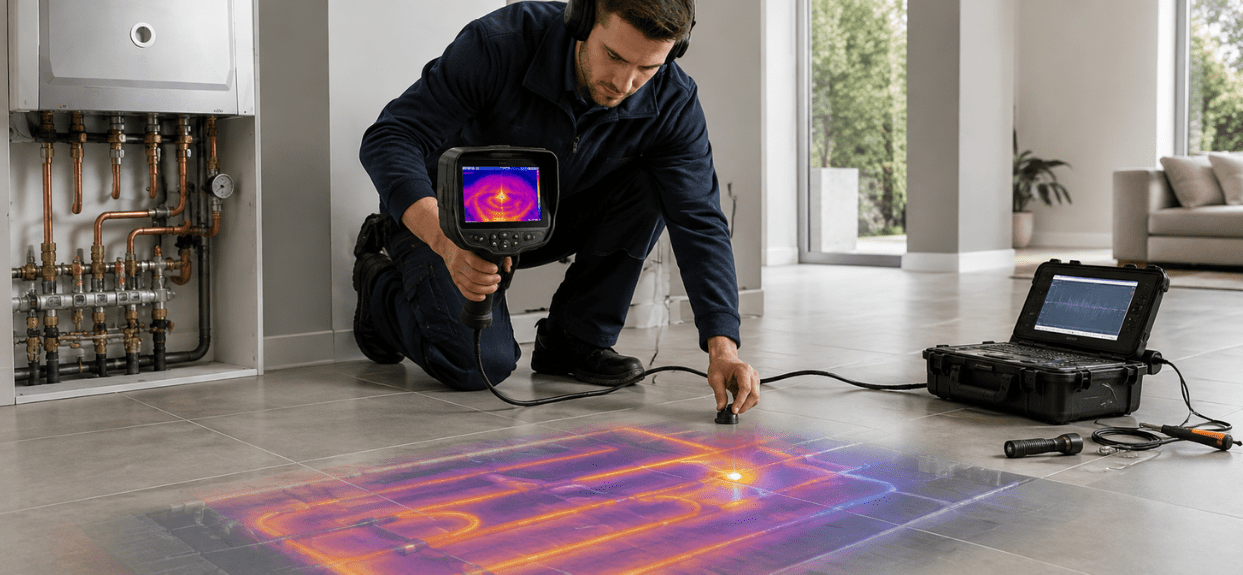
One of the most effective tools in a modern plumber’s kit is a thermal imaging camera. When the underfloor heating system is running, heat radiates from the pipes up through the floor. A thermal camera picks up variations in surface temperature and can reveal where water is escaping and pooling beneath the surface. It’s non-invasive, fast, and remarkably accurate for wet underfloor heating systems.
3. Acoustic Leak Detection Equipment
Water escaping from a pressurised pipe makes a sound – even when it’s beneath screed or concrete. Acoustic leak detection devices amplify these sounds and allow a plumber to listen through the floor and identify the exact location of the leak. This method is particularly useful when the thermal camera cannot give a clear reading, for example in rooms where the floor surface is very thick or insulated.
4. Tracer Gas Testing
In more complex cases, plumbers can introduce a tracer gas – typically a harmless mixture of hydrogen and nitrogen – into the pipe circuit. The gas escapes at the point of the leak and rises to the surface, where a sensitive detector picks it up. This is one of the most precise methods available and is used when other techniques haven’t given a definitive answer. If the leak turns out to be connected to your gas boiler circuit rather than the underfloor system itself, the same test approach applies.
5. Endoscopic Inspection
In some situations, particularly with older systems or where pipe routing is unclear, a small endoscopic camera may be used to inspect pipe runs without opening up large sections of floor. It’s the plumbing equivalent of keyhole surgery.
What Happens After the Leak Is Found?
Once the leak is located, a good plumber will explain clearly what the repair involves before any work begins. In many cases, access is required at only one small point rather than across the full floor area. Pipes are repaired or rerouted, and in most situations the disruption is far less than homeowners expect.
At DeWAR Plumbers, all plumbers are directly employed – not subcontractors – and the team takes pride in neat, precise work. Whether it’s a central heating system, a pressurised pipe circuit, or a full power flush required after a repair, the approach is always to fix it properly first time with minimum disruption.
Preventing Underfloor Heating Leaks in Dublin Homes
Prevention is always better than a repair job. A few simple habits can extend the life of your underfloor heating system significantly:
- Have the system serviced and pressure-checked annually as part of your broader gas boiler service or oil boiler service visit
- Never ignore small pressure drops – they rarely resolve on their own
- Make sure your system’s manifold valves are checked for corrosion or wear
- If you’re planning any renovation work, always tell your plumber about underfloor heating pipe layouts before drilling or cutting
Conclusion
Underfloor heating leak detection in Dublin has come a long way. The days of ripping up entire floors to find a hidden pipe problem are largely behind us. With the right equipment and an experienced team, leaks can be found quickly, repairs kept minimal, and your home back to normal with far less stress than you’d expect.
If you suspect a leak in your underfloor heating system anywhere across Dublin – from D1 to D24 – contact DeWAR Plumbers on 015143300. The team uses a wide range of inspection equipment and test methods to locate leaks in minimal time and with as little disruption to your home as possible.
FAQs
Q1: How do I know if my underfloor heating is leaking?
The most common signs are a consistent drop in system pressure, certain floor zones not heating properly, warm or damp patches appearing on the floor surface, and the boiler cycling more frequently than usual. If you notice any of these, it’s worth getting a professional leak detection check carried out before the problem gets worse.
Q2: Can a plumber find an underfloor heating leak without lifting the floor?
Yes, in the majority of cases. Specialist tools like thermal imaging cameras, acoustic detection equipment, and tracer gas testing allow plumbers to pinpoint the source of a leak through the floor without opening it up. Access is usually only needed at the specific leak point once it’s been identified.
Q3: How long does underfloor heating leak detection take in Dublin?
For most residential properties, a leak detection inspection takes between one and three hours depending on the size of the system and the complexity of the layout. If the leak is straightforward to locate, the process is often much quicker.
Q4: Is underfloor heating leak detection covered by home insurance in Ireland?
Many home insurance policies in Ireland do cover trace and access costs – meaning the cost of finding and accessing the leak. It’s worth checking your policy documents or speaking to your insurer before booking, as cover varies. Your plumber can also provide a written report of the detection work, which most insurers require.
Q5: Which Dublin areas do DeWAR Plumbers cover for leak detection?
DeWAR Plumbers cover all Dublin postal districts from D1 through to D24, as well as North County Dublin and South County Dublin. Whether you’re in Rathmines, Clontarf, Tallaght, or Swords, the team can reach you and carry out a full underfloor heating leak detection inspection.

- Sink Drain Repair in Dublin: When Is a Repair Better Than Replacement? - October 8, 2026
- Toilet Leaking at the Base: When You Need Toilet Repair in Dublin? - September 22, 2026
- Why Does Your Tap Keep Dripping After You Turn It Off? - September 16, 2026