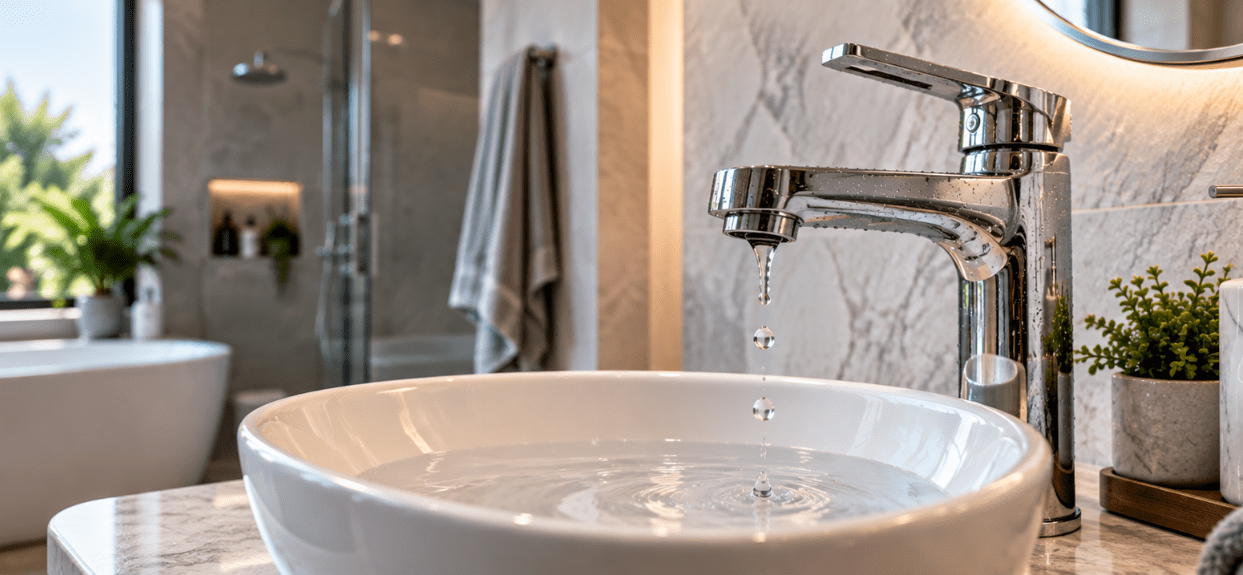
You turn the tap off and walk away and then – drip, drip, drip. A very common plumbing complaint in Dublin homes is the familiar sound coming from the kitchen sink or bathroom basin. This might sound like a minor irritant, but a dripping tap is rarely just an annoyance. It’s a sign that something inside the tap is coming to an end of its life, and ignoring it will only worsen over time.
If your tap keeps dripping after you turn it off, there is always a reason – and the good news is, it can be fixed. This guide walks you through the most common causes of a leaking tap, what happens if you leave it too long, and when to call a professional plumber in Dublin.
How Much Water Does a Dripping Tap Actually Waste?
Before getting into the causes, it’s worth understanding what’s really at stake. A slow drip can add up to hundreds of liters of wasted water in a month if left to run for days and weeks on end.
Water conservation matters – especially in a city like Dublin where older housing stock often has ageing plumbing. A dripping kitchen tap or a bathroom basin that won’t stop running is not just costing you money on your water bill, it’s putting unnecessary strain on your home’s plumbing system.
The Most Common Reasons a Tap Keeps Dripping
1. Worn-Out Washers
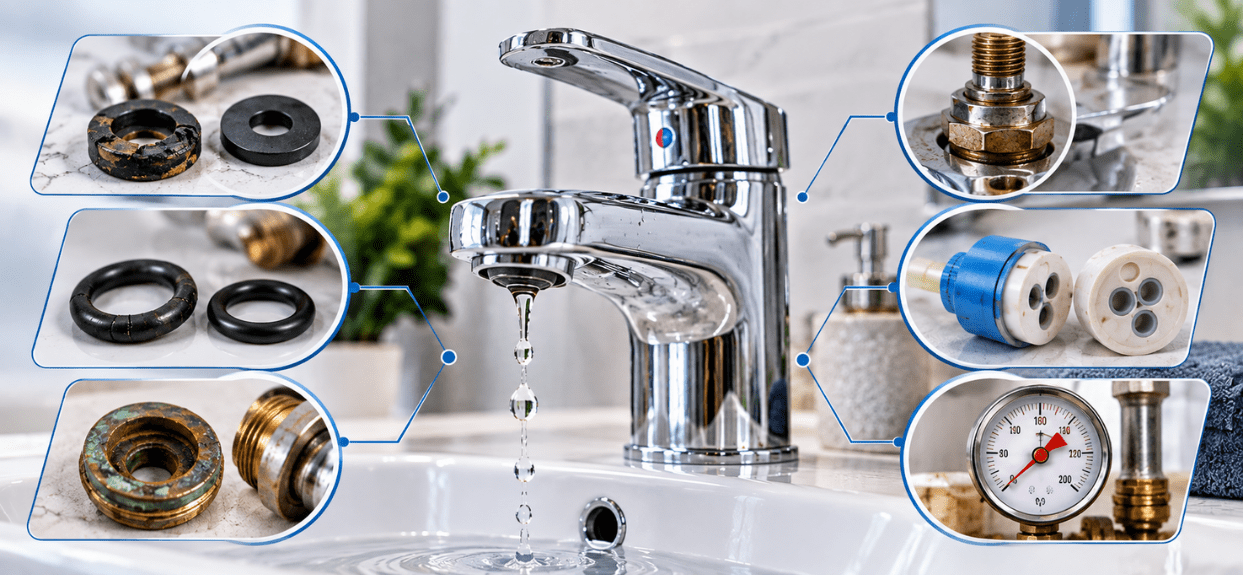
This is the most frequent cause of a dripping tap in older Dublin homes. Every time you turn on the tap, the rubber washer inside is pressed against a valve seat. That washer wears out after years of daily use, hardens or gets damaged and when it can no longer form a good seal water gets through even when the tap is off.
Replacing a worn washer is a straightforward job for an experienced plumber, and it’s one of the most common tap repair jobs carried out across Dublin every week.
2. Damaged O-Rings
On mixer taps and pillar taps, O-rings sit around the spindle of the tap and help create a watertight seal. When the O-ring deteriorates – which it does naturally over time – you’ll often notice water dripping from the handle or base of the tap rather than the spout itself.
If you have a leaking tap that seems to be coming from around the handle rather than the nozzle, a damaged O-ring is likely the cause.
3. Corroded Valve Seat
The tap is connected to the spout by the valve seat. “Over time, the sediment and minerals in the water build up around the valve seat and corrode it. If the valve seat is corroded then water will still flow when the tap is fully closed. This type of issue is common in areas with hard water and in older Dublin properties where pipes haven’t been serviced in years. The same mineral build-up that damages valve seats can also affect your radiators and central heating system – a power flush is often the most effective way to clear that sediment and restore efficiency throughout the whole system.
4. Loose or Worn Packing Nut
The packing nut keeps the stem of the tap in place. In normal use, if it gets loose, water may leak around the stem. This often shows as dripping near the handle – subtle at first, but it gets worse over time if left without attention.
5. Ceramic Disc Issues
Many modern taps use ceramic disk cartridges instead of old-fashioned rubber washers. These discs are more durable, but they’re not indestructible. A cracked or chipped ceramic disc will cause a dripping tap that won’t stop no matter how hard you turn it off. Sediment build-up can also scratch the disc surface and cause the same problem.
6. High Water Pressure
Sometimes the problem isn’t the tap itself – it’s the water pressure in your home. High pressure in the water system can push water past washers and seals, causing drips at certain times of day (usually at nite when demand is lower and pressure jumps). If your tap only leaks at certain times this could be the culprit. A pump repair or pressure regulator installation may be needed to resolve the underlying pressure problem properly.
Why You Shouldn’t Ignore a Dripping Tap?
A lot of Dublin homeowners put up with a dripping tap for months, assuming it’s too minor to bother with. Here’s why that logic works against you:
- Water waste adds up fast. Even a slow drip can waste thousands of litres each year.
- Drips get worse over time. A worn washer doesn’t heal – it deteriorates further with every use.
- Damp and mould can follow. Persistent moisture under the sink or around the basin can lead to mould growth and water damage to cabinets and flooring.
- It signals broader plumbing wear. A leaking tap is often the first visible sign that your plumbing fixtures are reaching the end of their service life.
Getting a professional tap repair done promptly almost always costs less than dealing with the downstream damage from a drip left too long.
Different Tap Types, Different Problems – Here’s What to Look For?
Not all taps are built the same, and the type of tap you have influences what’s likely causing the drip.
Pillar taps (the classic separate hot and cold design) most commonly develop washer and O-ring problems. They’re straightforward to repair but require the water supply to be isolated first.
Mixer taps (single lever or dual handle, one spout) can develop cartridge and ceramic disc faults, as well as O-ring wear around the spout. These taps often require cartridge replacement rather than washer replacement.
Monobloc mixer taps (popular in modern Dublin kitchens and bathrooms) use ceramic cartridges and are generally reliable, but when they do fail, the cartridge usually needs full replacement.
Knowing your tap type helps a plumber diagnose and fix the fault faster, and it’s worth noting the brand if you can – parts availability varies.
Can You Fix a Dripping Tap Yourself?
Technically, some basic tap repairs – like changing a washer – can be done as a DIY job. However, there are real risks involved if you’re not familiar with your home’s plumbing setup:
- Turning off the wrong stopcock and losing water supply to the whole property
- Overtightening fittings and cracking the tap body
- Incorrect washer size causing the drip to return almost immediately
- Missing underlying issues like corrosion or high pressure that a plumber would spot
For most Dublin homeowners, the safer and more cost-effective route is to have a qualified plumber carry out the repair correctly the first time. A proper plumbing service covers not just the visible symptom (the drip) but a check of the surrounding fixtures and pipework.
When Should You Call a Plumber for a Dripping Tap in Dublin?
Call a plumber if:
- The dripping tap has been running for more than a few days
- You’ve replaced the washer yourself but the drip came back
- Water is coming from the handle or base of the tap, not just the spout
- You can hear dripping inside the wall or under the cabinet
- Multiple taps in your home are dripping – this may point to a systemic pressure issue
- You have an older property with original brass fittings that haven’t been serviced in years
Blocked drains and hidden pipe leaks often go hand-in-hand with neglected tap issues in older Dublin homes. A professional leak detection check alongside your tap repair can catch multiple problems in one visit – saving you both time and money in the long run.
DeWAR Plumbers – Tap Repair Experts Across Dublin
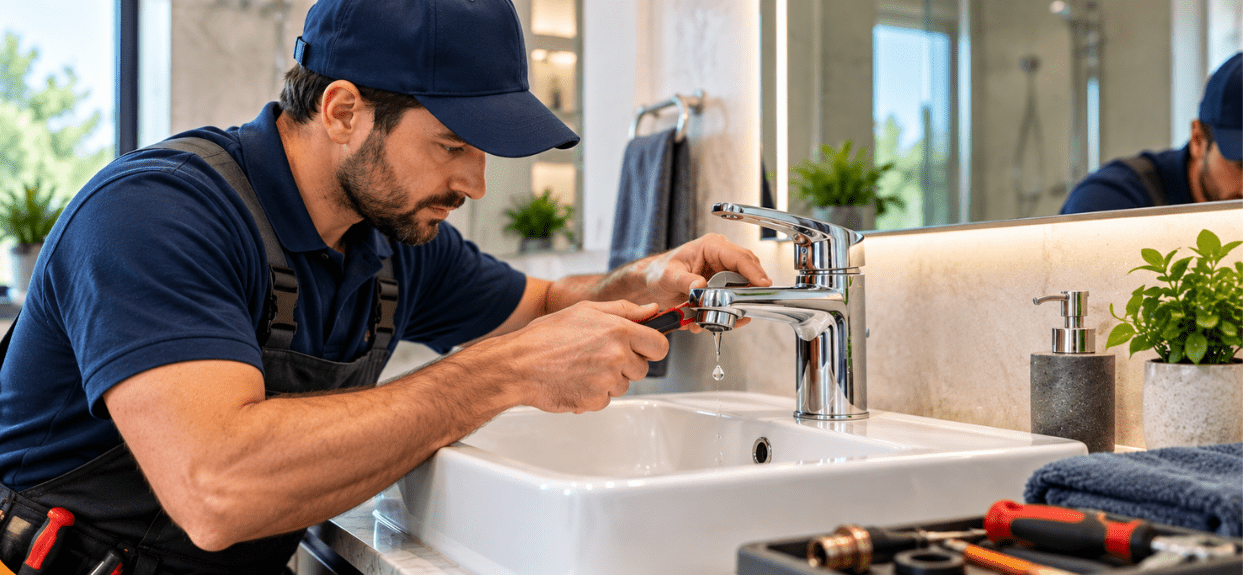
At DeWAR Plumbers, the team deals with dripping taps, leaking faucets, and worn-out tap components every day across all Dublin postcodes – from D1 right through to D24, North County Dublin, and South County Dublin.
The team provides water-saving tap solutions for both residential homes and commercial premises. Whether it’s a kitchen sink tap that’s been dripping for weeks, a bathroom basin that’s wasting water overnight, or a mixer tap in a rental property that needs urgent attention, DeWAR Plumbers send out directly employed, experienced plumbers – not subcontractors.
You can also book a shower repair or toilet repair in the same visit if you have other plumbing issues that need attention.
📞 Call: 015143300 🌐 Visit: dewarplumbers.ie
Conclusion
A dripping tap is one of those problems that’s easy to put off – but the longer it runs, the more water is wasted, the more wear accumulates, and the more likely you are to end up with a bigger repair job down the line. Whether the cause is a worn washer, a damaged O-ring, a corroded valve seat, or a ceramic disc fault, the fix is almost always straightforward when handled promptly by a qualified plumber.
If your tap won’t stop dripping after you turn it off, don’t wait. Contact DeWAR Plumbers on 015143300 or visit dewarplumbers.ie to book a call-out at a time that suits you. Serving all Dublin postcodes with directly employed, experienced plumbers who get the job done right the first time.
FAQs
Q1: Why does my tap drip only at night?
This is usually linked to water pressure. At night, when demand on the water system drops, pressure rises – and if your tap seals are slightly worn, that extra pressure forces water through. A plumber can check your home’s pressure and install a regulator if needed.
Q2: Is a dripping tap an emergency in Dublin?
A slow drip isn’t typically a plumbing emergency, but it should be fixed within a few days. If water is gushing, flowing continuously, or you suspect a burst pipe behind the wall, call an emergency plumber in Dublin immediately.
Q3: How much does tap repair cost in Dublin?
Costs vary depending on the fault and parts required. DeWAR Plumbers are transparent about pricing – you’ll always be told the cost and asked for approval before any parts are ordered or additional work is carried out.
Q4: Can a dripping tap cause damp or mould in my home?
Yes. Persistent drips – especially under kitchen sinks or in tight bathroom cabinets – create ongoing moisture that leads to mould growth and wood rot. If you’ve noticed damp patches near your sink, get the tap repaired and the affected area checked at the same time.
Q5: My new tap is already dripping – is that normal?
No. A newly installed tap should not drip. If it does, it’s likely been fitted with an incorrect washer, the cartridge wasn’t seated properly, or there’s an installation fault. Call the plumber who fitted it, or contact DeWAR Plumbers on 015143300 to have it assessed and corrected.

- Why Does Your Tap Keep Dripping After You Turn It Off? - September 16, 2026
- Oil Boiler Repair Dublin: 10 Warning Signs You Shouldn’t Ignore - September 11, 2026
- Underfloor Heating Leak Detection: How Plumbers Find Leaks Without Ripping Up Your Floor? - September 1, 2026